
Cash in Safe insurance
BRILink agents run banking services from their own shops, so they keep a lot of cash on hand. I designed a cheaper monthly plan that renews itself, and the first way for agents to claim their insurance in the app instead of at a BRI branch.
Company
Bank Rakyat Indonesia
My role
Product Designer, Bill & Payment Squad
Year and platform
2026, BRILink app and mPOS
Status
Shipped
At a glance
The problem
Cash in Safe only came as a yearly plan, which cost more upfront and lapsed when agents forgot to renew. And after a robbery, agents had to bring paper documents to a BRI branch to claim.
What I did
Designed a monthly plan with automatic payments, a policy page that always shows the current policy, and a claim flow agents can finish in the app, including every error and edge case.
The result
Shipped in the BRILink app and mPOS. Agents can now get covered for Rp8.500 a month and claim without visiting a branch. Appeals for rejected claims come next.
Insurance on both sides of the counter
BRILink agents are shop owners who offer BRI’s banking services to their neighbourhood: transfers, cash withdrawals, bill payments. The BRILink app has two kinds of insurance. Agents sell some to their customers, and buy others to protect themselves.
Sold to customers
Penjualan: agents register customers or collect their payments
MotorKu
RumahKu
Tempat Usaha
AMKKM
BPJS Kesehatan
BPJS Ketenagakerjaan
Bought by agents
Pembelian: protection for the agent’s own cash
Cash in Safe: cash kept in the shop
Cash in Transit: cash on the way to the bank
Two problems the business wanted solved
Yearly plans lapsed
Cash in Safe was sold yearly only. That meant a bigger payment upfront, and agents who did buy often forgot to renew, leaving their cash uncovered without realising.
Claiming meant a trip to the bank
To claim, agents had to report to a BRI branch within 7 days of the loss and bring documents within 15 days. That’s a lot to ask of someone whose shop was just robbed, and slow for the teams processing claims.
The project started as a request from the business team, with no PRD and a messy sprint. I worked with the PM and PO, BRI Insurance, BRI Life, the principal team, the scrum master and tech to define the flows as we went, so the design became the spec.
PM and PO
BRI Insurance
BRI Life
Principal team
Scrum master
Tech team
The design journey
Buying
A monthly plan that’s easy to say yes to
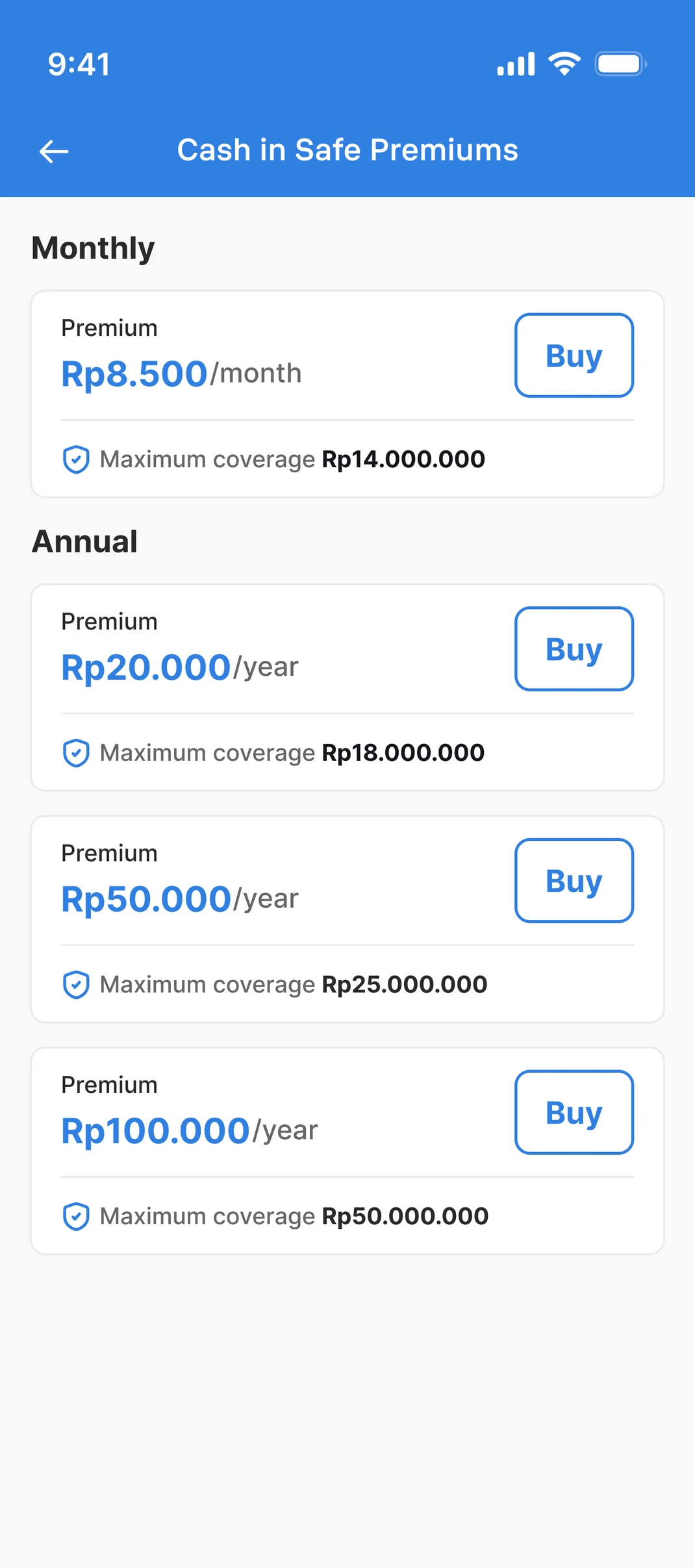
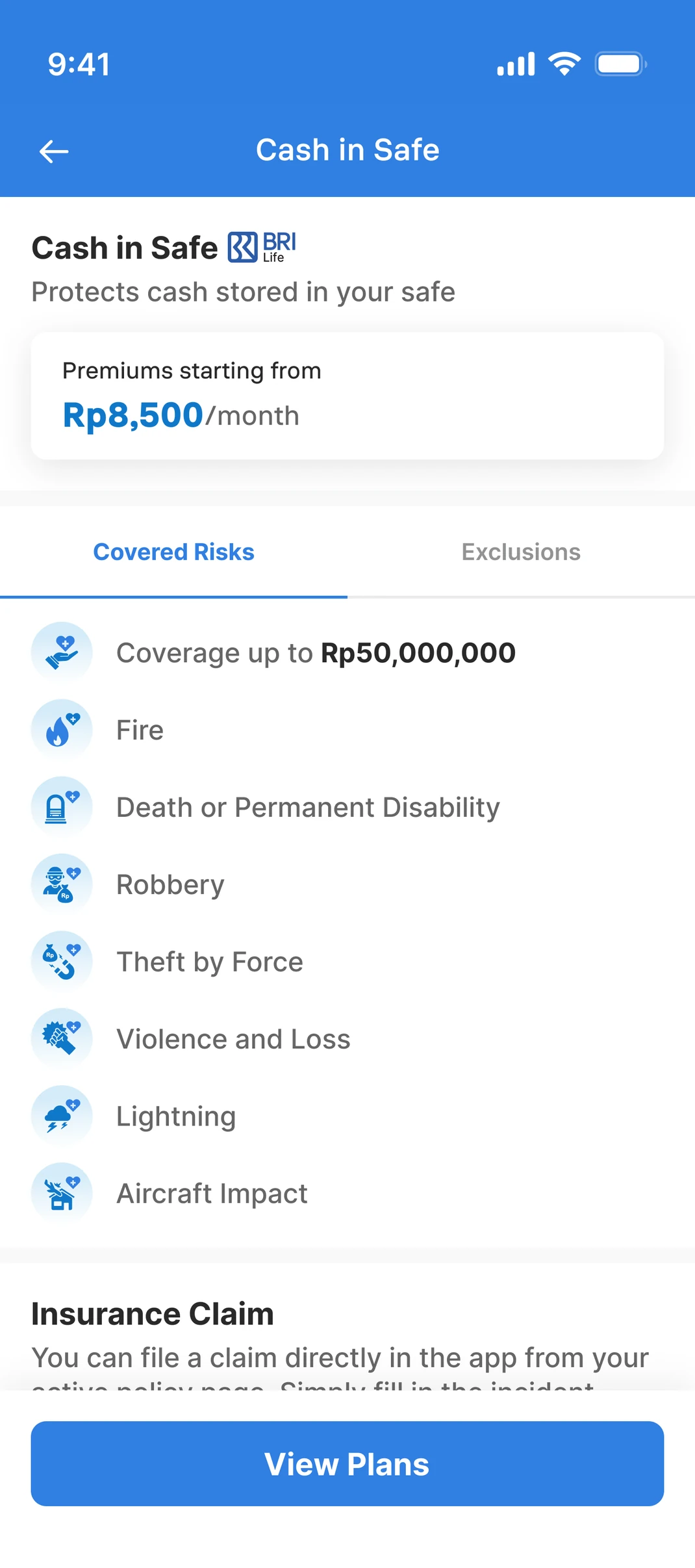
Agents see what’s covered and what isn’t before they pay. The new monthly plan sits first: Rp8.500 a month, paid automatically every 30 days, next to the yearly options for agents who prefer them.
Proof of storage
Show the safe, without guesswork
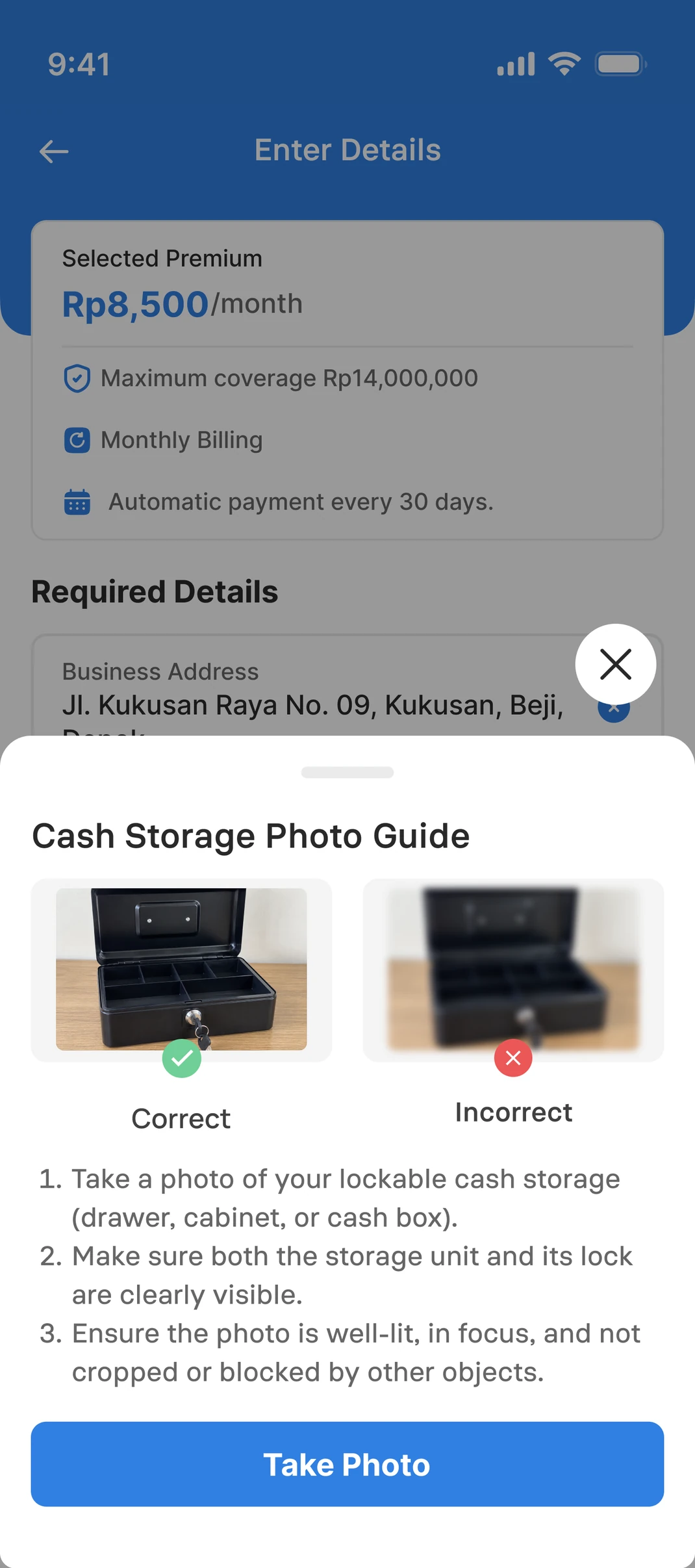
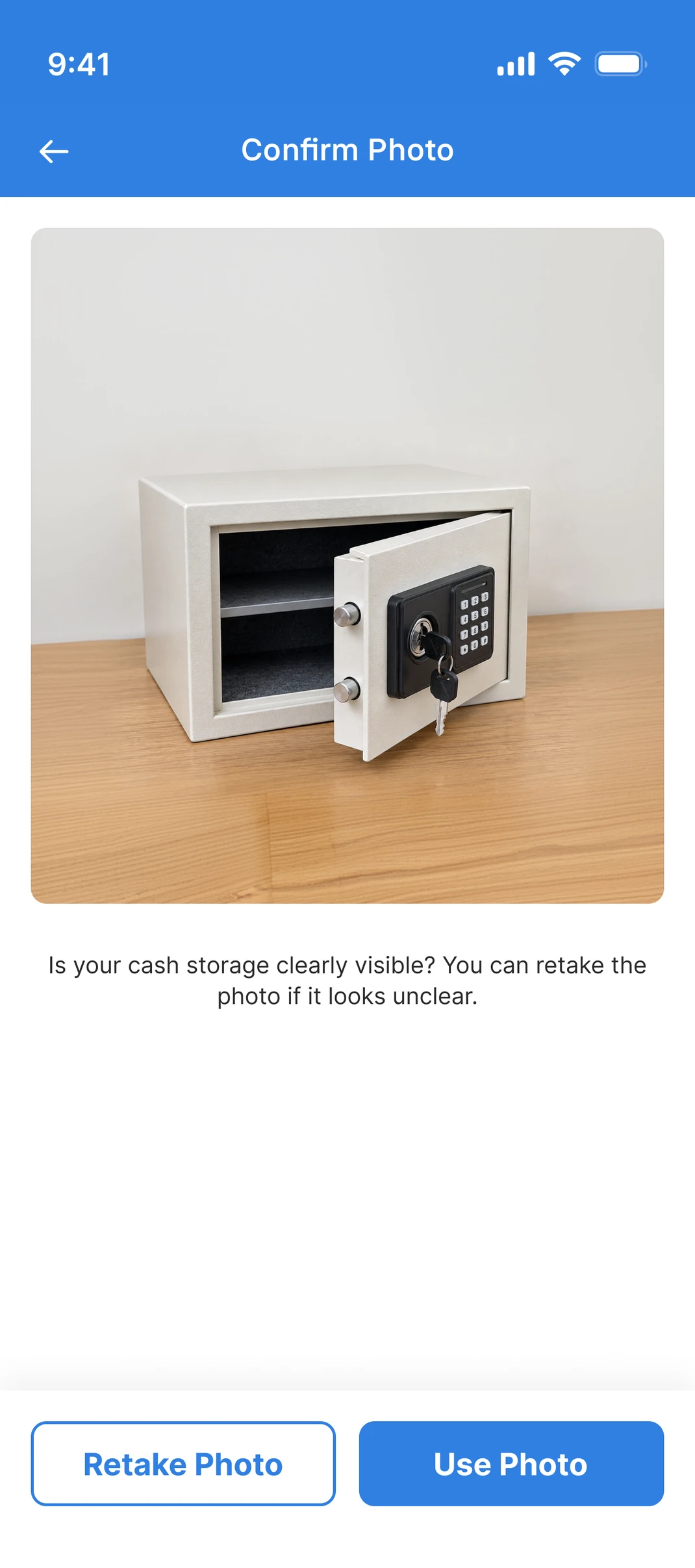
The insurer needs a photo of where the cash is kept. A photo guide shows a good and a bad example, the camera frames the safe, and agents confirm the photo before it uploads.
Managing the policy
A policy number that changes every month
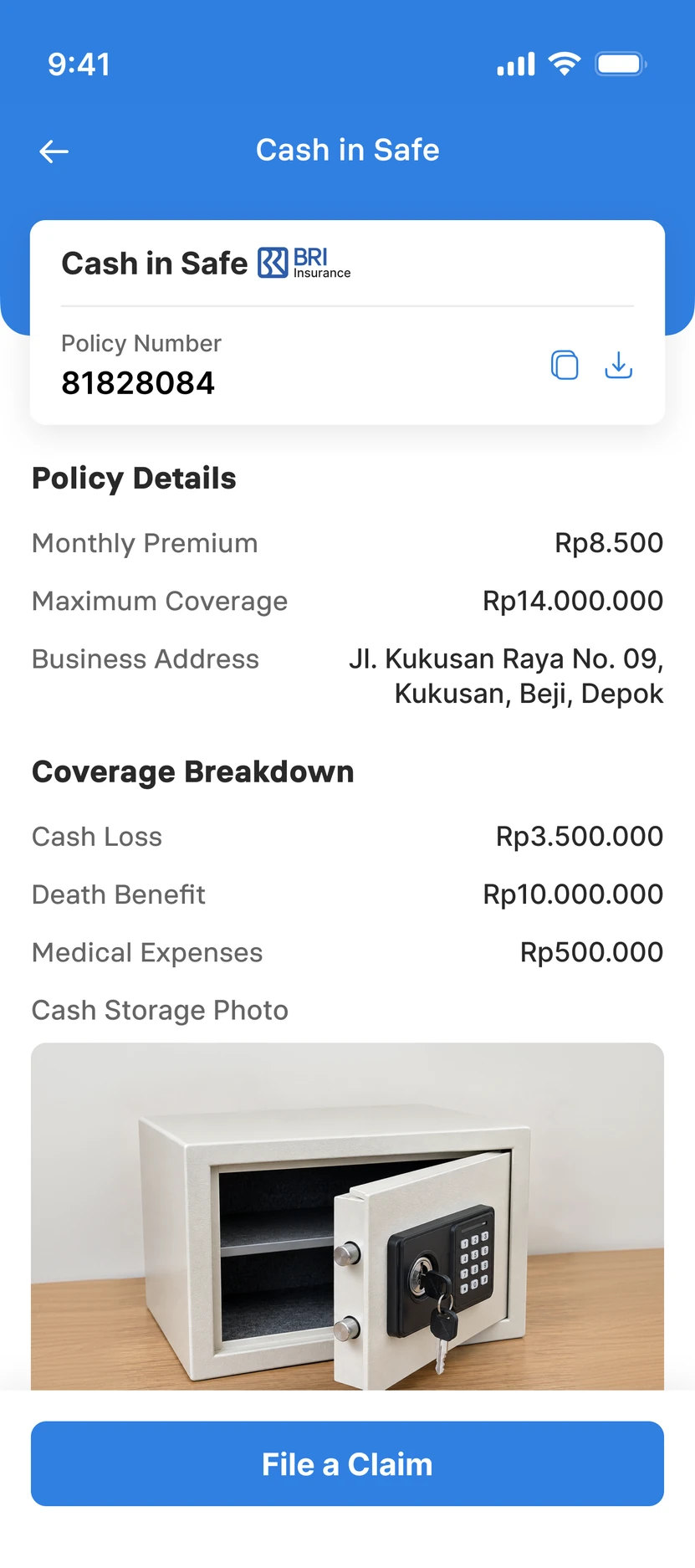
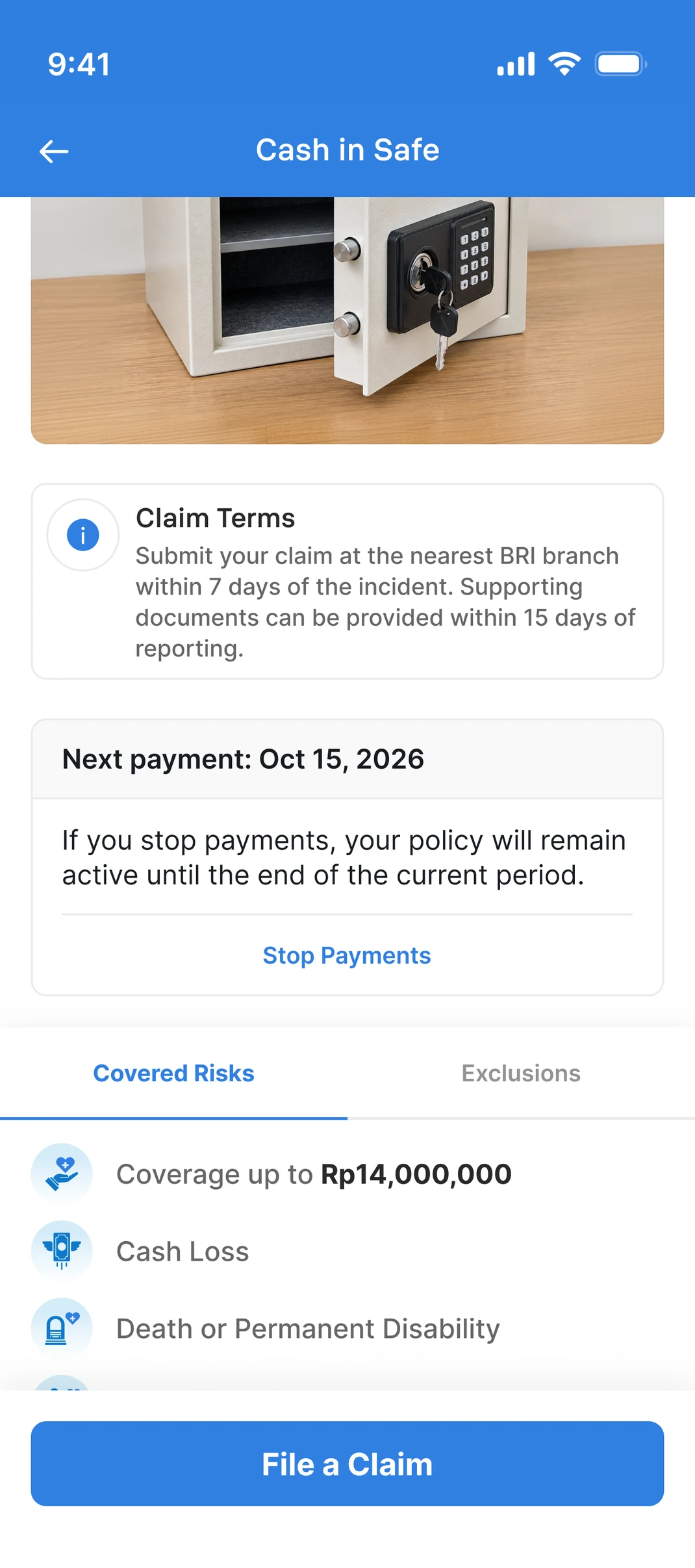
With automatic monthly payments, every renewal creates a new policy. The policy card on the detail page always shows the current number, so a claim is filed against the right one without the agent having to look it up.
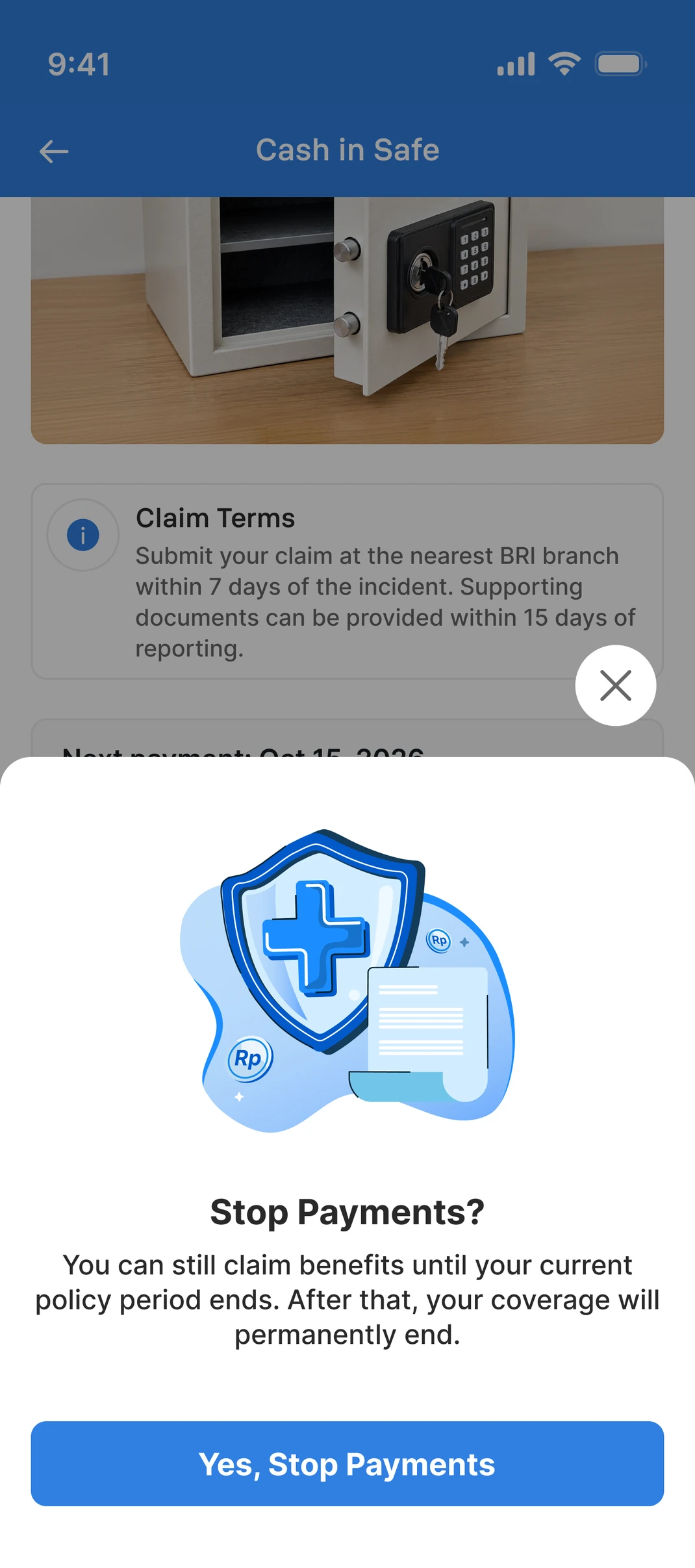
Stopping payments takes a clear confirmation, and the policy stays active until the paid period ends.
Claiming
Claim from the shop, not the branch
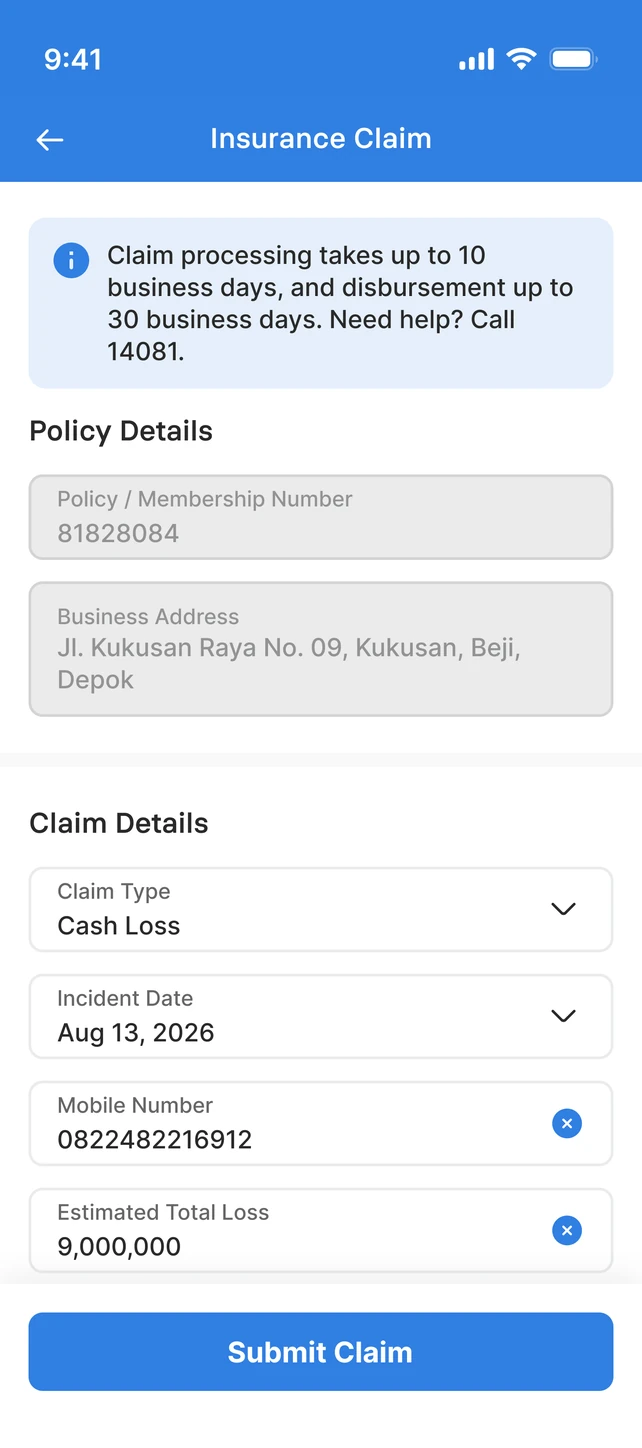
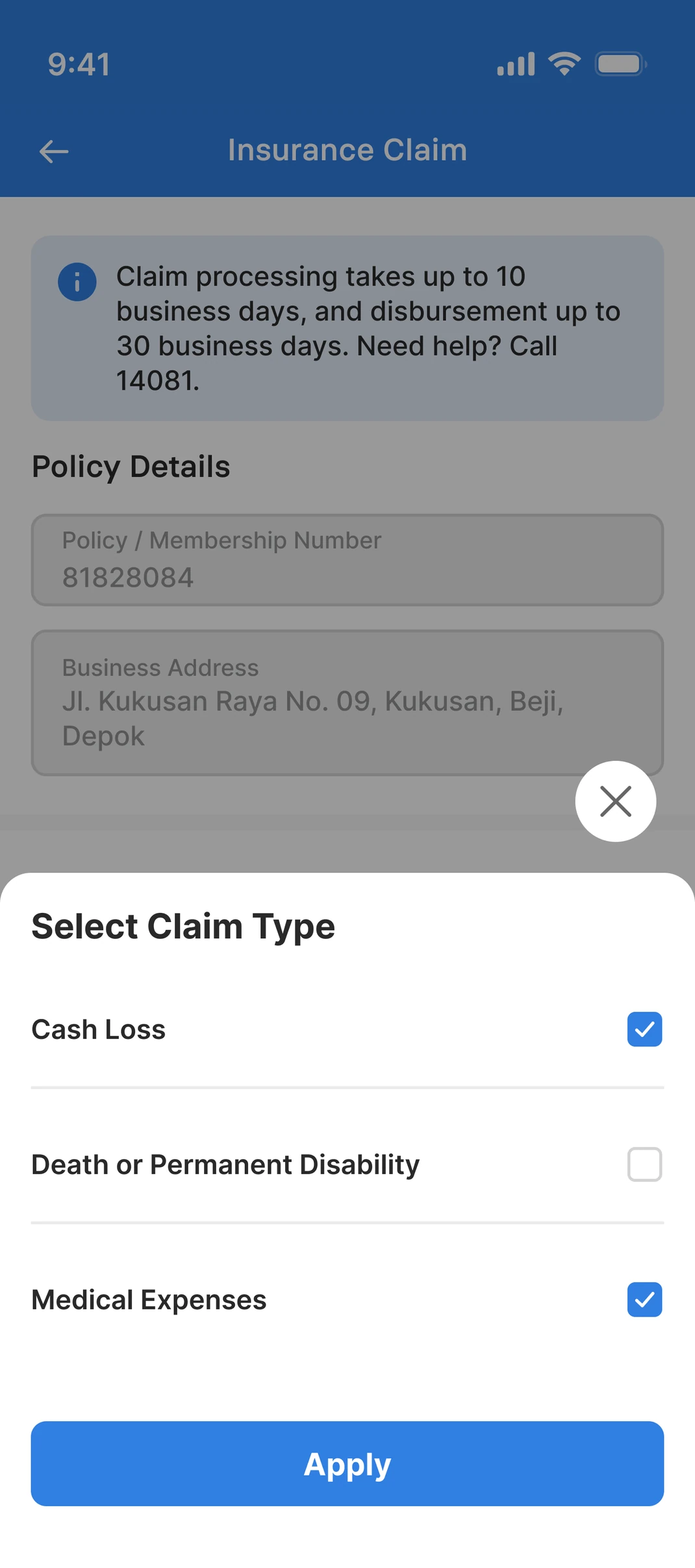
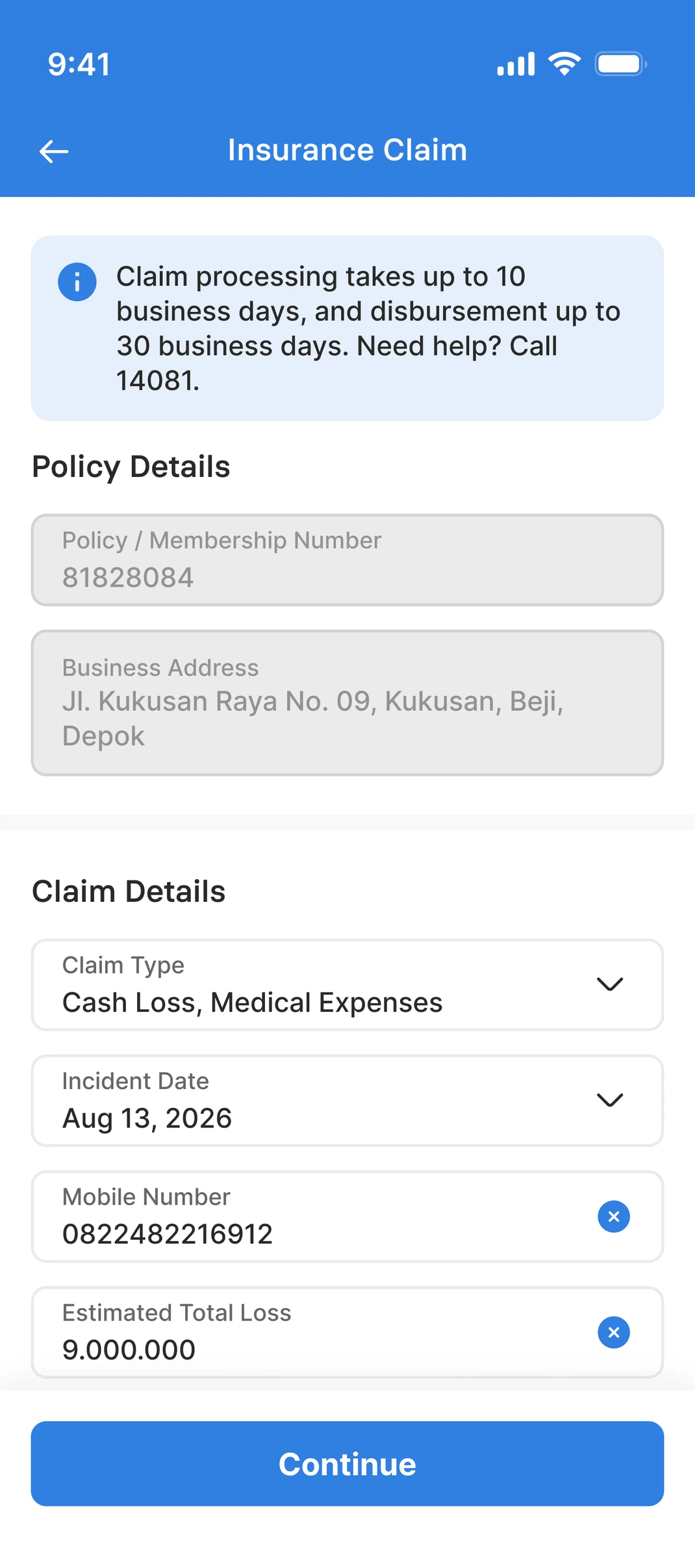
Agents pick what happened (lost money, death or permanent disability, or medical costs), the date, and how much they lost. Policy details are filled in for them. Expected timelines sit at the top: up to 10 working days to process, 30 to pay out.
Documents and confirmation
Paperwork, done with the camera
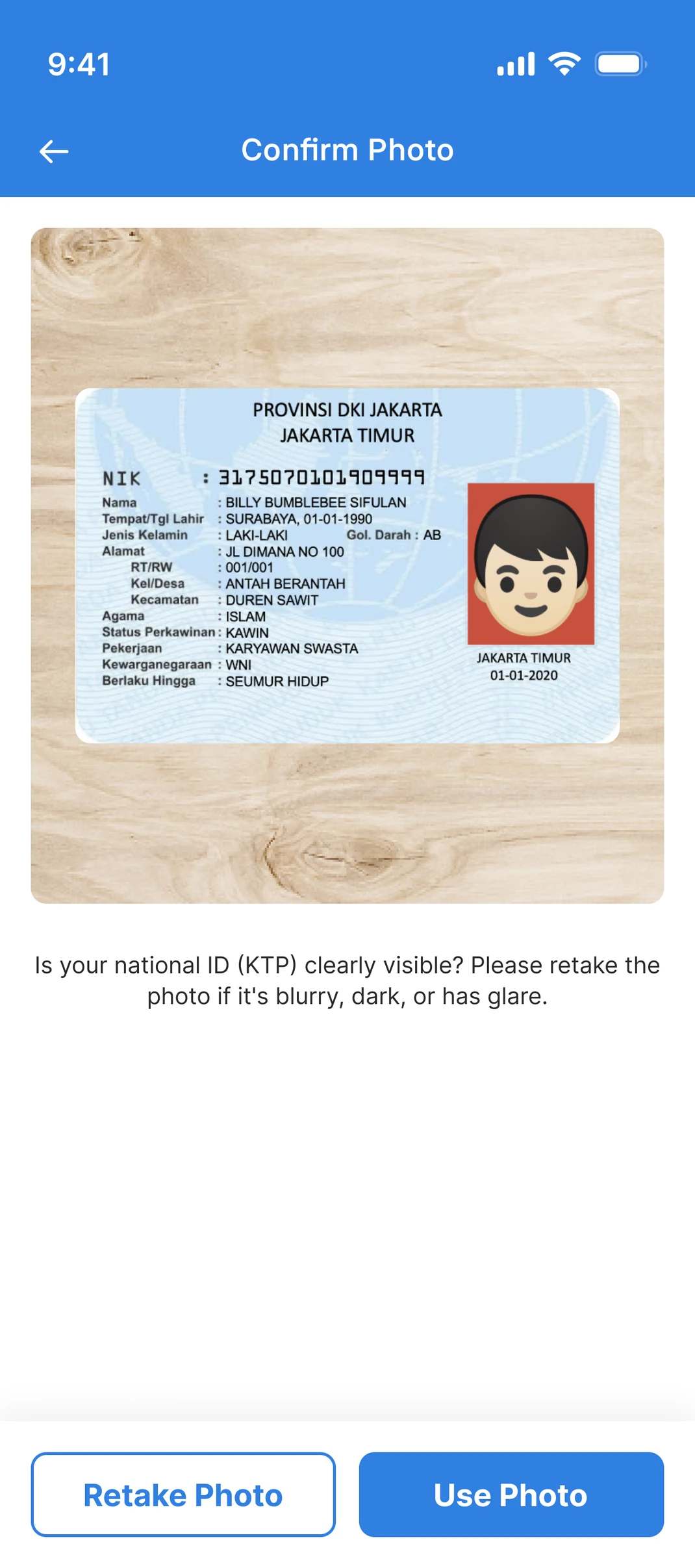
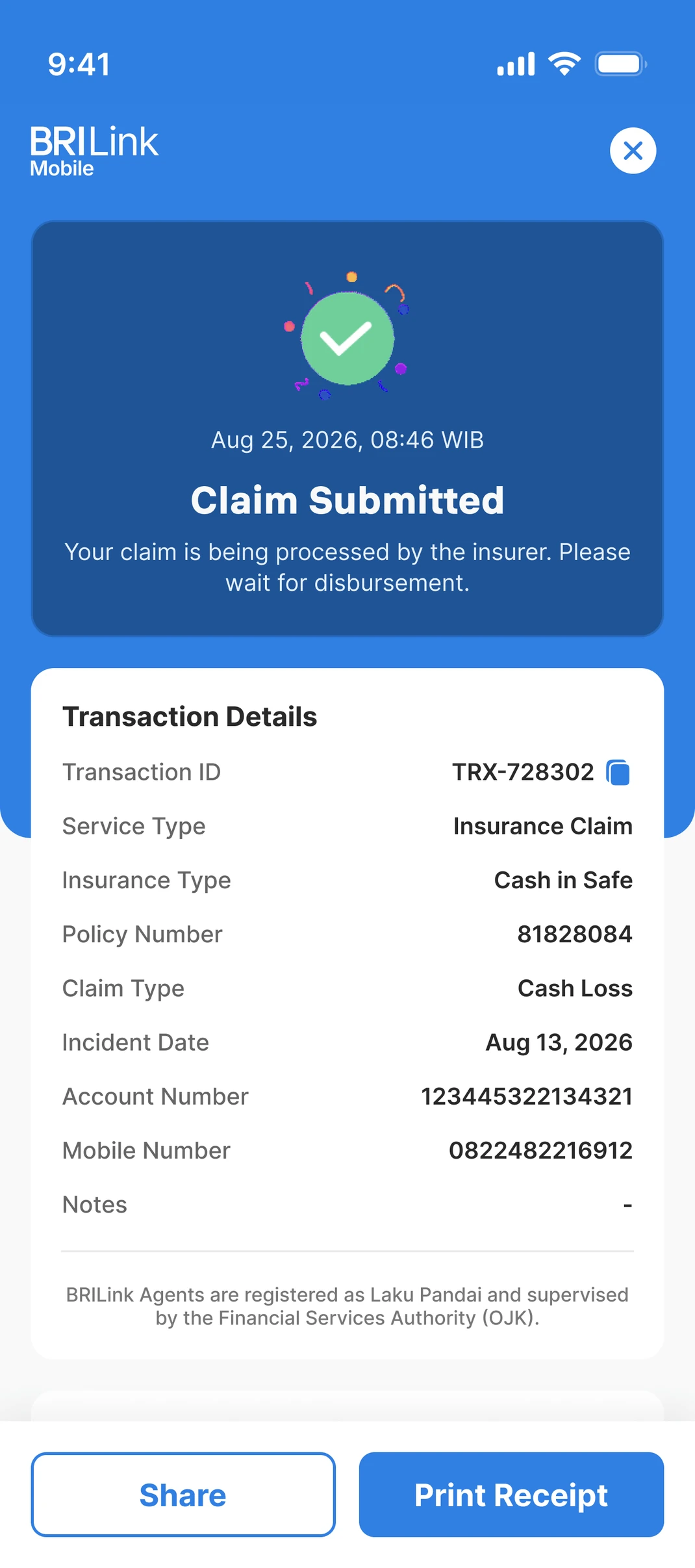
The four documents the insurer needs (ID card, the damaged safe, the incident location and a police report) are each one photo away, with a frame for the ID card and a check before upload. A summary and PIN confirm the claim.
Designed for what goes wrong
This is a money flow inside a banking app, so every failure needed a clear next step.
Outside operating hours
Purchases pause during the nightly cut-off, with the exact time to try again.
Balance and limits
Separate messages for not enough balance and for hitting the daily transaction limit.
Wrong PIN
Warnings after one and two wrong attempts, then a blocked PIN with a way to reset it.
Pending and failed
Receipts and activity history for successful, pending and failed payments.
Photos
Camera or gallery uploads, retakes, upload progress and broken images.
No policy yet
An empty state that leads straight to buying Cash in Safe.
Stopped payments
Clear status once payments stop, while cover lasts until the period ends.
Download and share
Receipts agents can download, share or print for their records.
Holding the line on the experience
With a tight sprint, the tech team pushed to cut the flow down, with many reasons why parts of it couldn’t be built. Instead of defending each screen, I went back to why the project existed.
“The old experience no longer fits how agents work. If we only refresh the UI and don’t fix the experience, what’s the point of this project?”
How I framed it to the tech team
That reframing changed the conversation from effort to purpose. Tech built the design with only small changes.
Where it landed, and what’s next
Cash in Safe shipped with the monthly plan and in-app claims in the BRILink app and mPOS. For the first time, an agent who has been robbed can start a claim from their shop.
The next sprint adds appeals, so agents can challenge a rejected claim in the app too.
What I learned
Without a PRD, the flow is the spec
Mapping every path and error state gave every team one shared picture of what we were building.
Defend the experience, not the pixels
Pushback is easier to resolve when the conversation is about what users need, not about individual screens.
Have a role in mind?
Let’s talk.
Open to product design roles, remote or on-site with relocation. Based in Jakarta (GMT+7).