
SmartPay
In 2021, Indonesia’s e-wallet market was crowded and growing fast. As one of a team of four in Smartfren’s growth team, I helped pitch SmartPay: an e-wallet built around what the big players didn’t offer, from payments that work without internet to money you manage with friends.
Company
Smartfren Telecom
My role
UI/UX designer, team of four
Year and platform
2021, mobile app concept
Status
Pitched internally and prototyped, not built
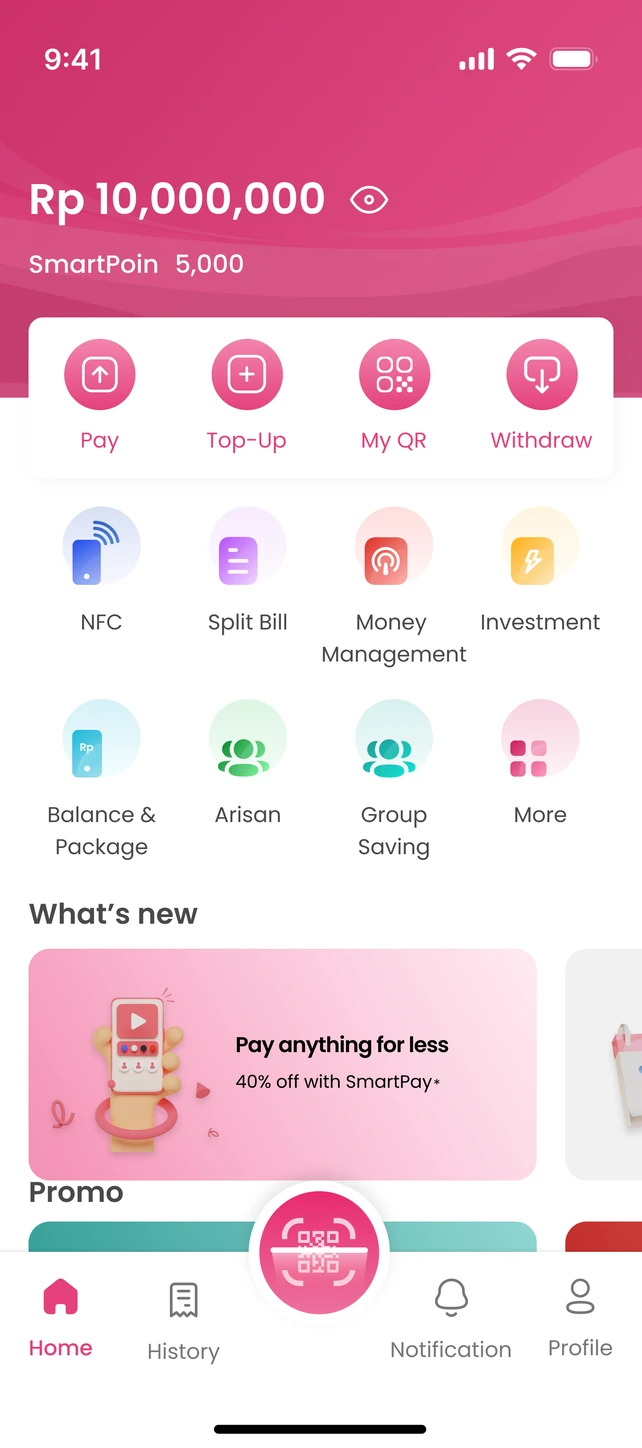
At a glance
The problem
Indonesia already had five major e-wallets, most backed by tech giants, with nearly identical features. A new wallet needed a real reason to exist.
What I did
Market and competitor research, a user survey, the information architecture, a style guide and high-fidelity prototypes for nine flows, from onboarding to group savings.
The result
A clickable prototype the team pitched internally. SmartPay didn’t move forward, but it covered the full arc from market research to a tested product concept.
A fast-growing market with no room for another copy
Digital payments were taking off in Indonesia, but the market was already split between a few large players, each with an ecosystem behind it: ShopeePay with Shopee, GoPay with Gojek, OVO with Grab and Tokopedia, DANA with Ant Group and Emtek.
$13.95B
in e-money transactions in Indonesia in 2020, up from $2.08B in 2016
~38%
of the e-wallet market held by OVO alone in 2020
5
major e-wallets competing for the same everyday payments
Sources: Bank Indonesia via Asian Banker Research (transaction value); Katadata survey, 2020 (market share); Momentum Works (ownership).
Finding the gap
I compared SmartPay’s planned features against the five leaders. On the basics, everyone was the same. Three areas were wide open.
Feature
SmartPay
GoPay
OVO
DANA
LinkAja
ShopeePay
Merchant payments (parking and more)
✓
✓
✓
✓
✓
✓
QRIS payments
✓
✓
✓
✓
✓
✓
Pay later
✓
✓
✓
✕
✓
✓
NFC payments
✓
✕
✕
✕
✕
✕
SMS payments, no internet needed
✓
✕
✕
✕
✕
✕
Group money: savings, split bill, arisan
✓
✕
✕
✓
Manual split bill only
✕
✕
Investment
✓
✓
✓
✕
✓
✕
Bills: electricity, internet, water
✓
✓
✓
✓
✓
✓
Mobile credit and data packages
✓
✓
✓
✓
✓
✓
Competitive analysis as of 2021.
Pay without internet
Payments over SMS, a channel a mobile operator already runs, for moments when data is slow or runs out.
Tap to pay
NFC payments with saved cards, so paying at the counter is as quick as tapping the phone.
Money with friends
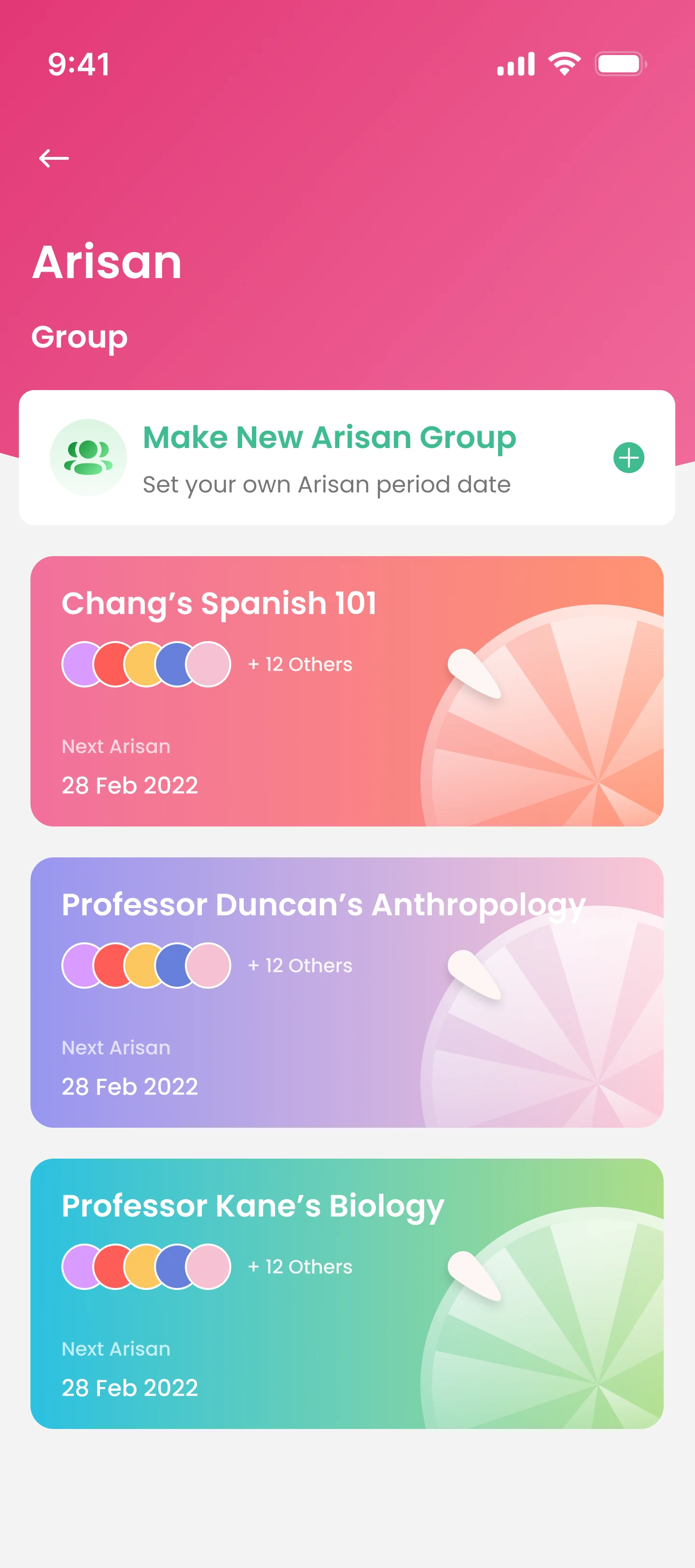
Split bill, group savings and arisan, the rotating savings groups many Indonesians already run in chats and with cash.
How we worked
Immersion
Studied the app’s goals and the project requirements.
Research
Market data, a competitor analysis and a user survey.
Structure
Information architecture for every flow and its branches.
Design
A style guide, high-fidelity screens and a clickable prototype.
Testing
Usability tests to find what was unclear or unnecessary.
The flows that set SmartPay apart
SMS payments
Keep paying when the internet doesn’t
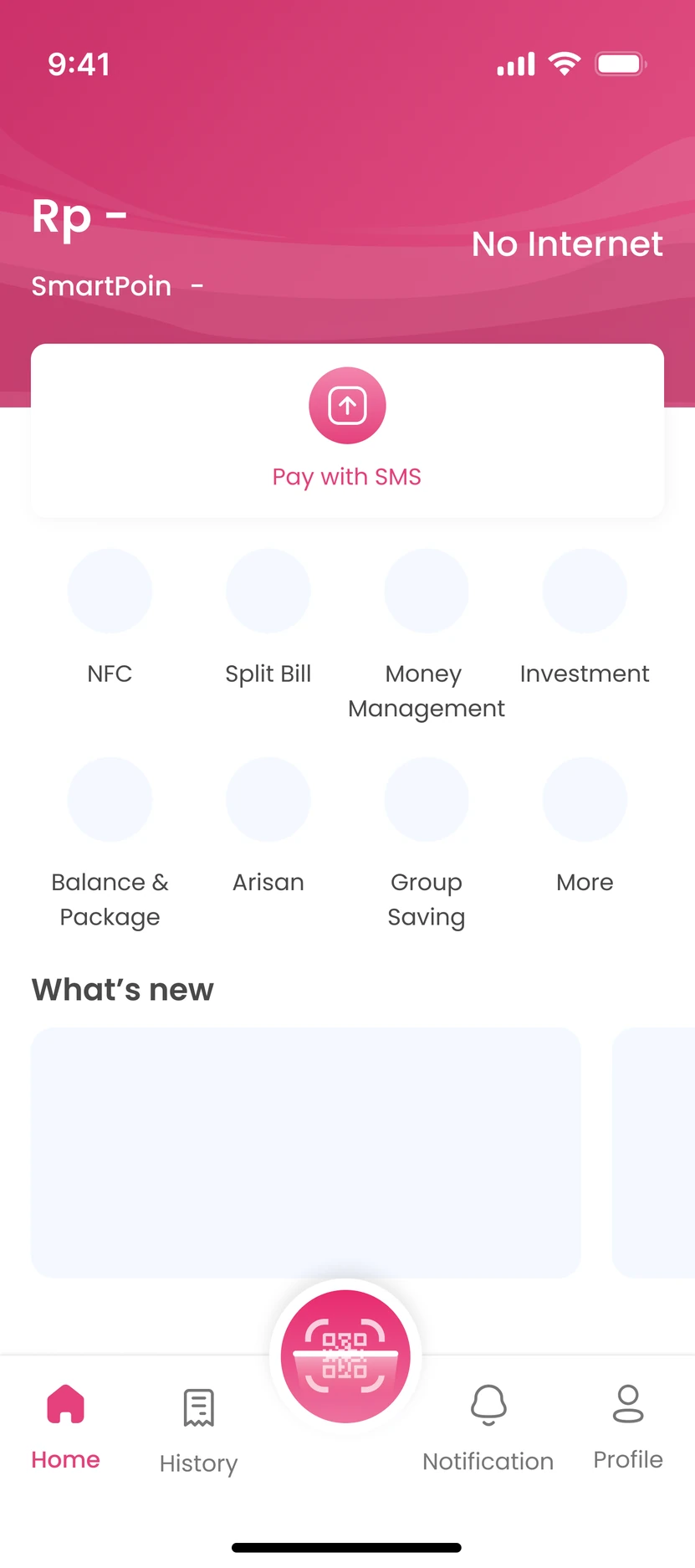
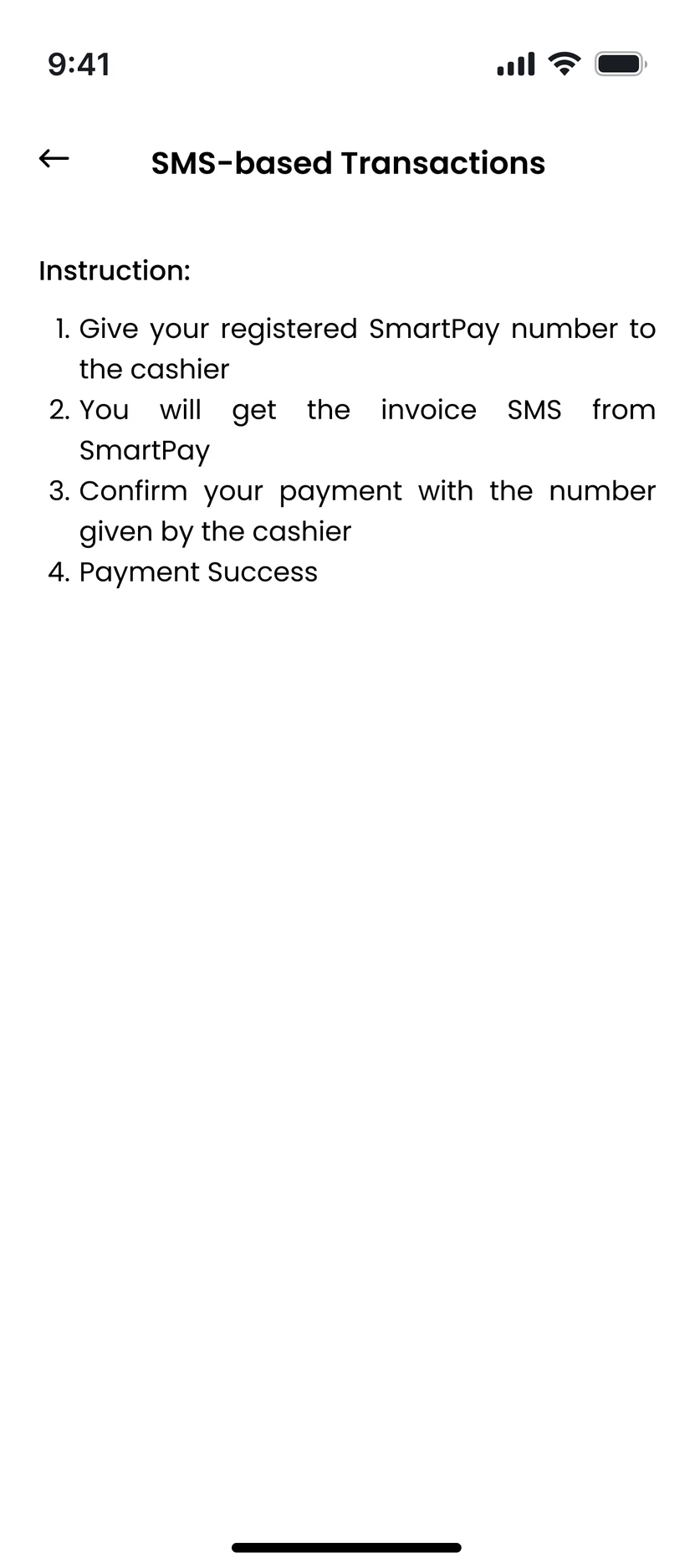
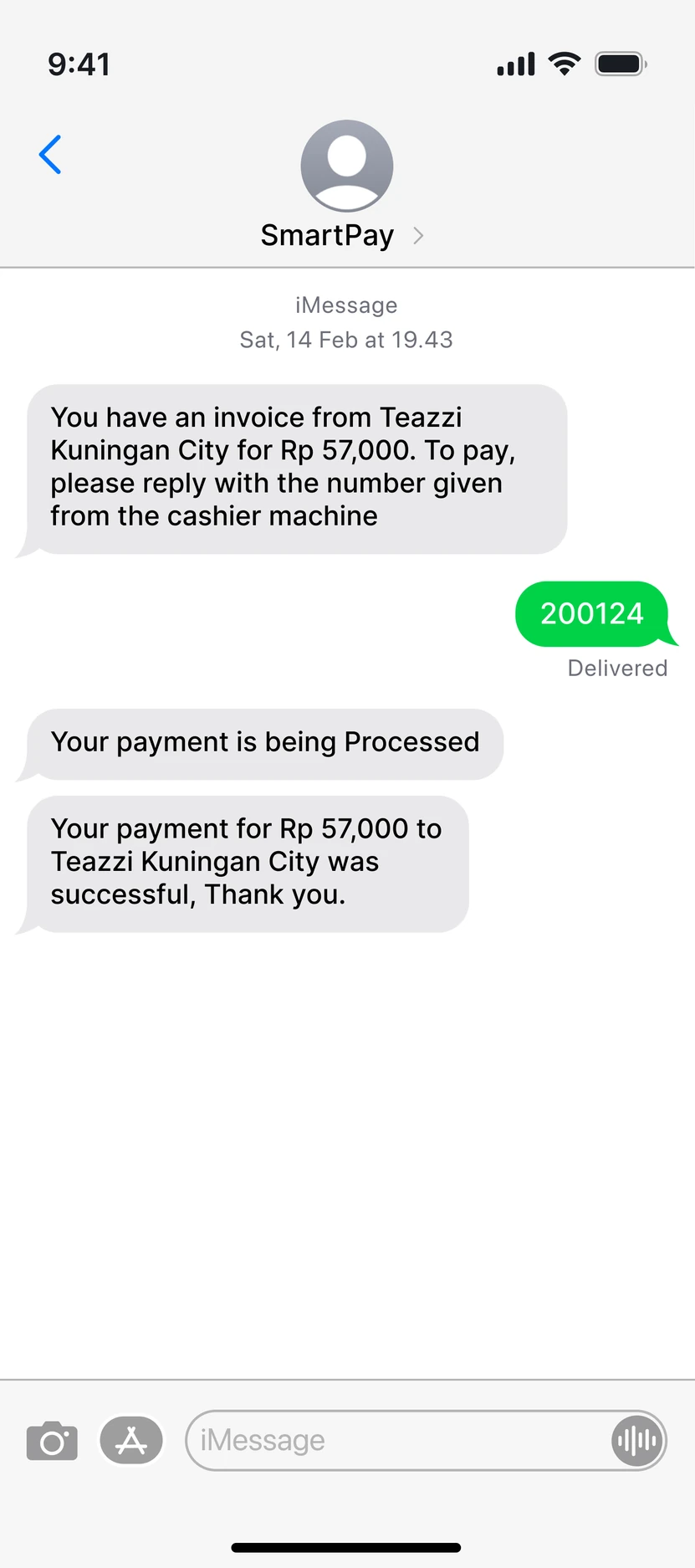
When there’s no connection, the home screen says so and offers SMS payment. The customer gives the cashier their SmartPay number, gets an SMS invoice, and replies to confirm. The steps are spelled out before they start.
NFC payments
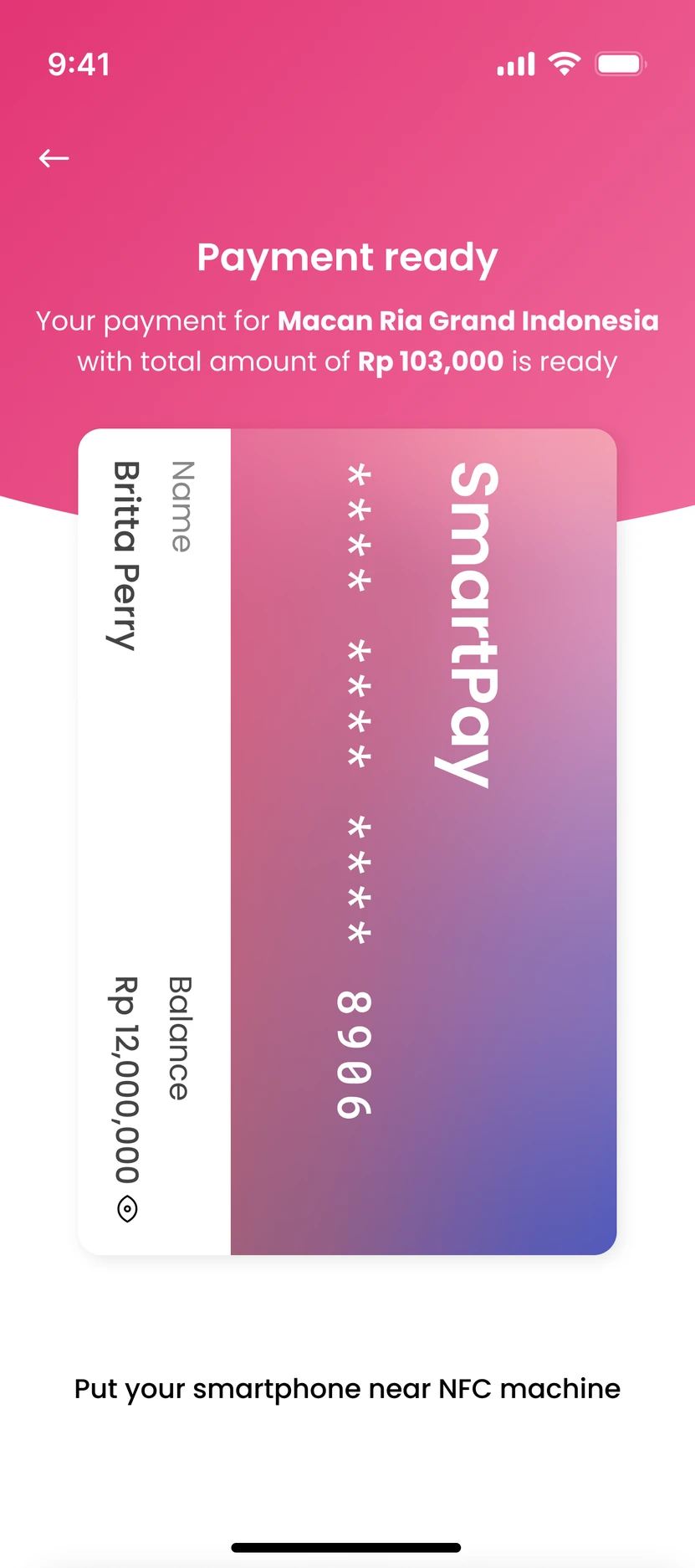
Pick a card, tap, done
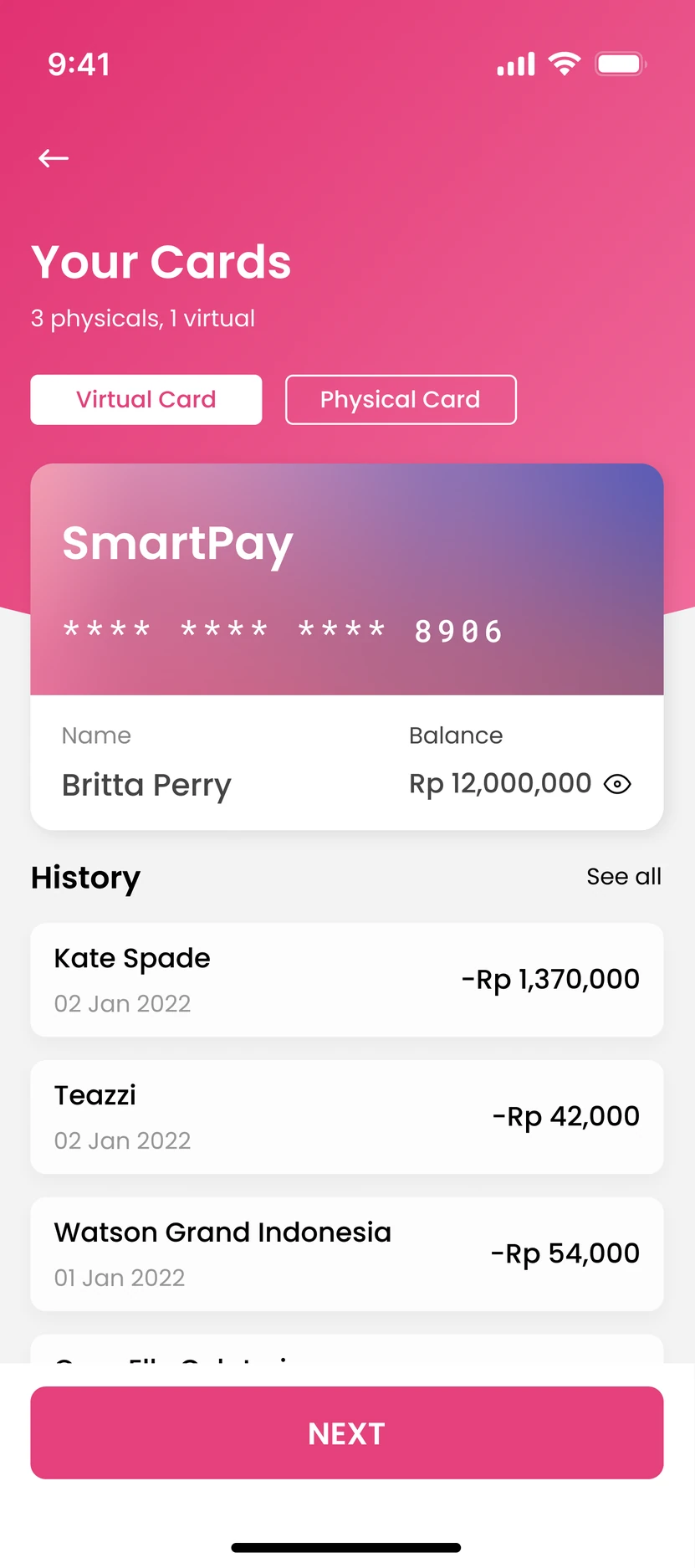
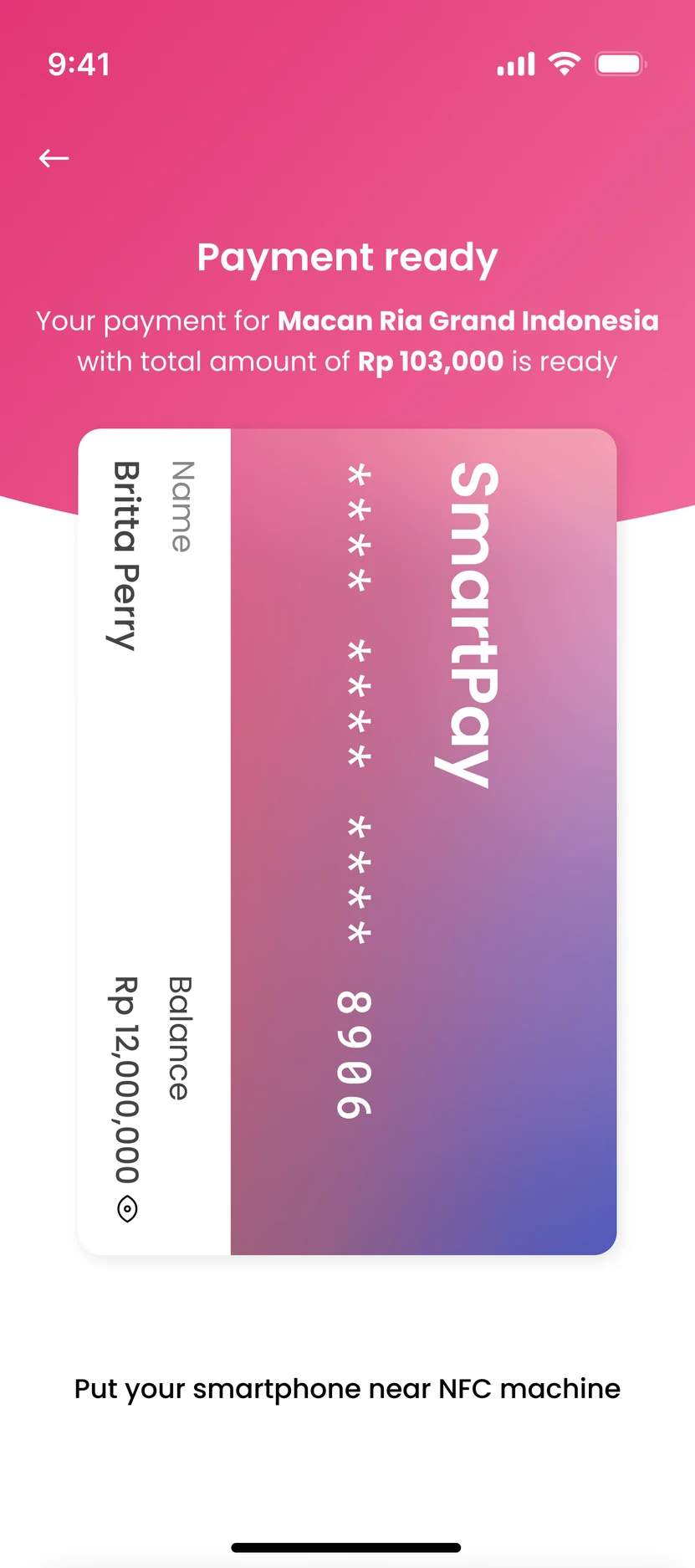
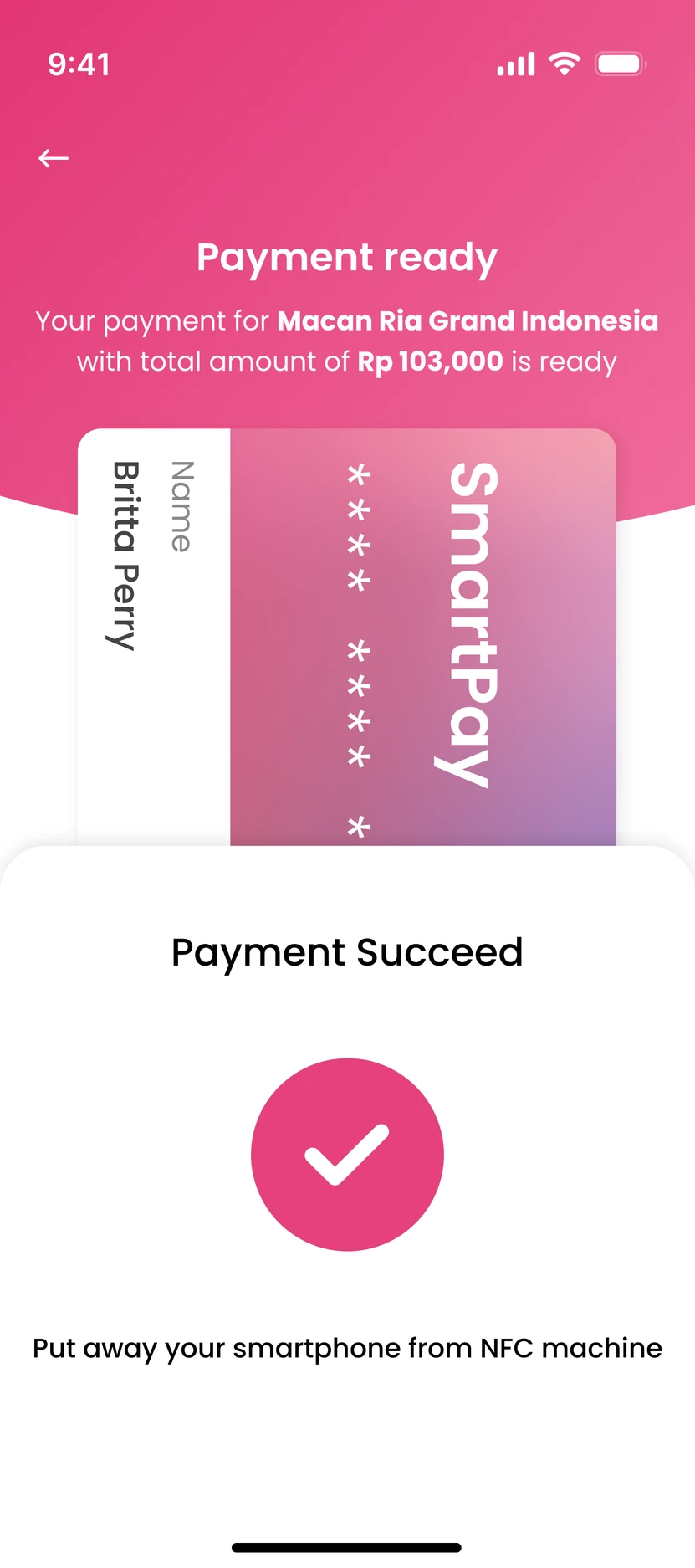
Users keep their SmartPay card and bank cards in one place. After unlocking with a PIN, fingerprint or Face ID, they hold the phone to the machine and see the payment go through.
Split bill
From receipt to requests in one go
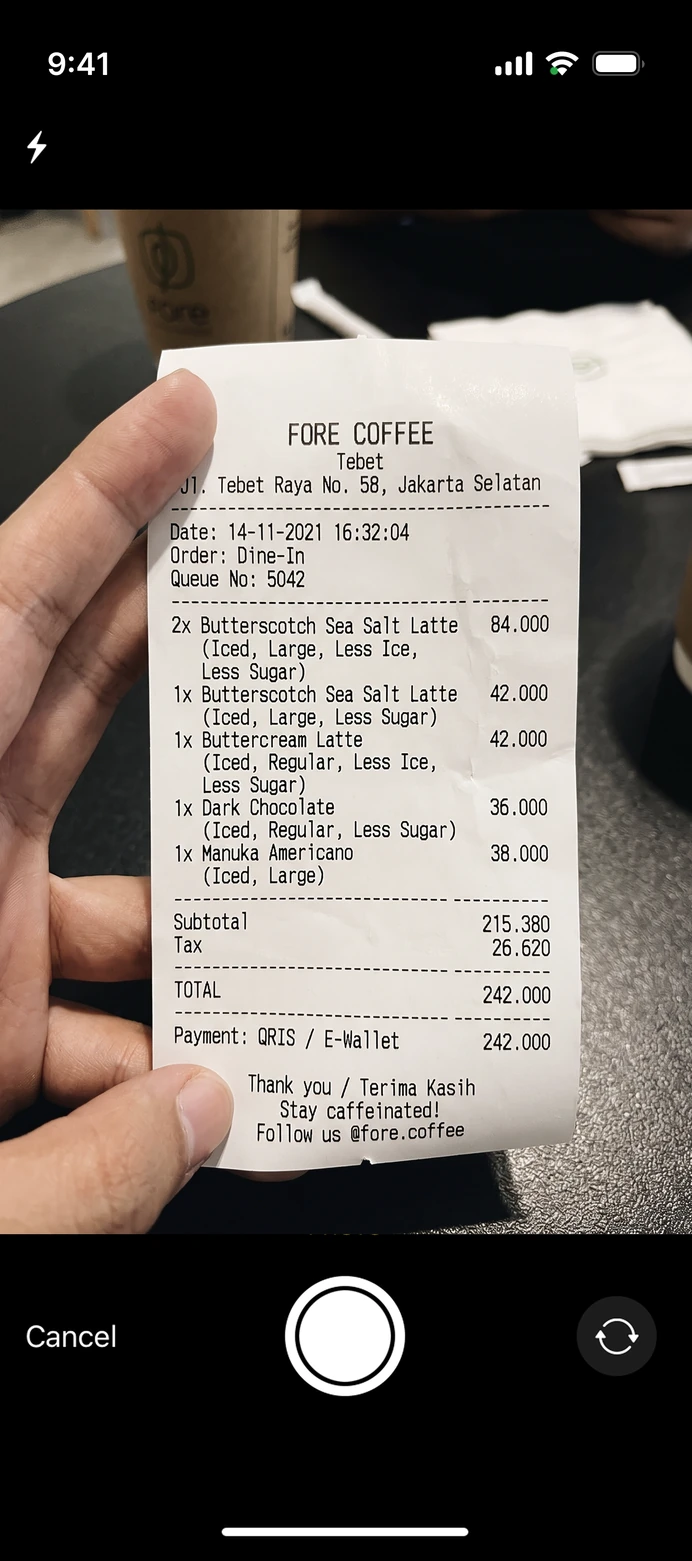
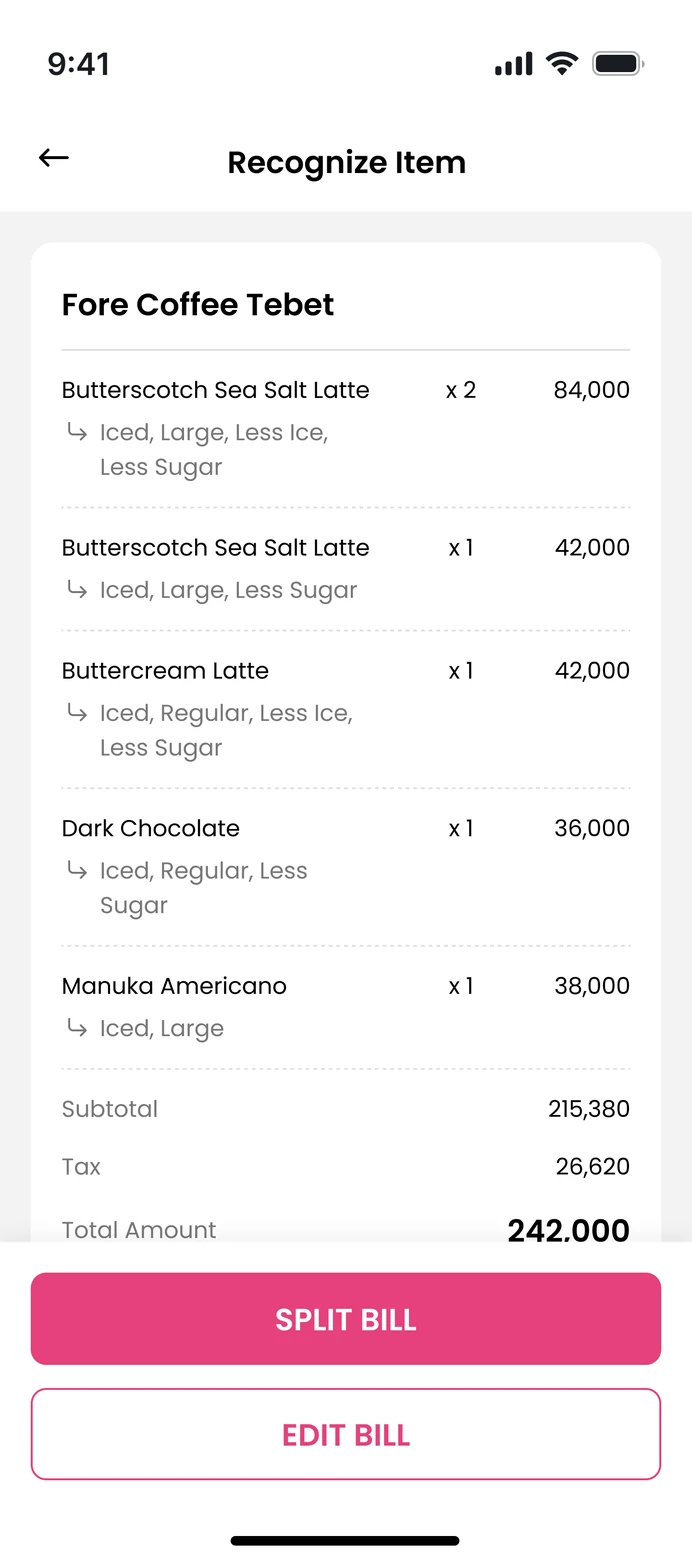
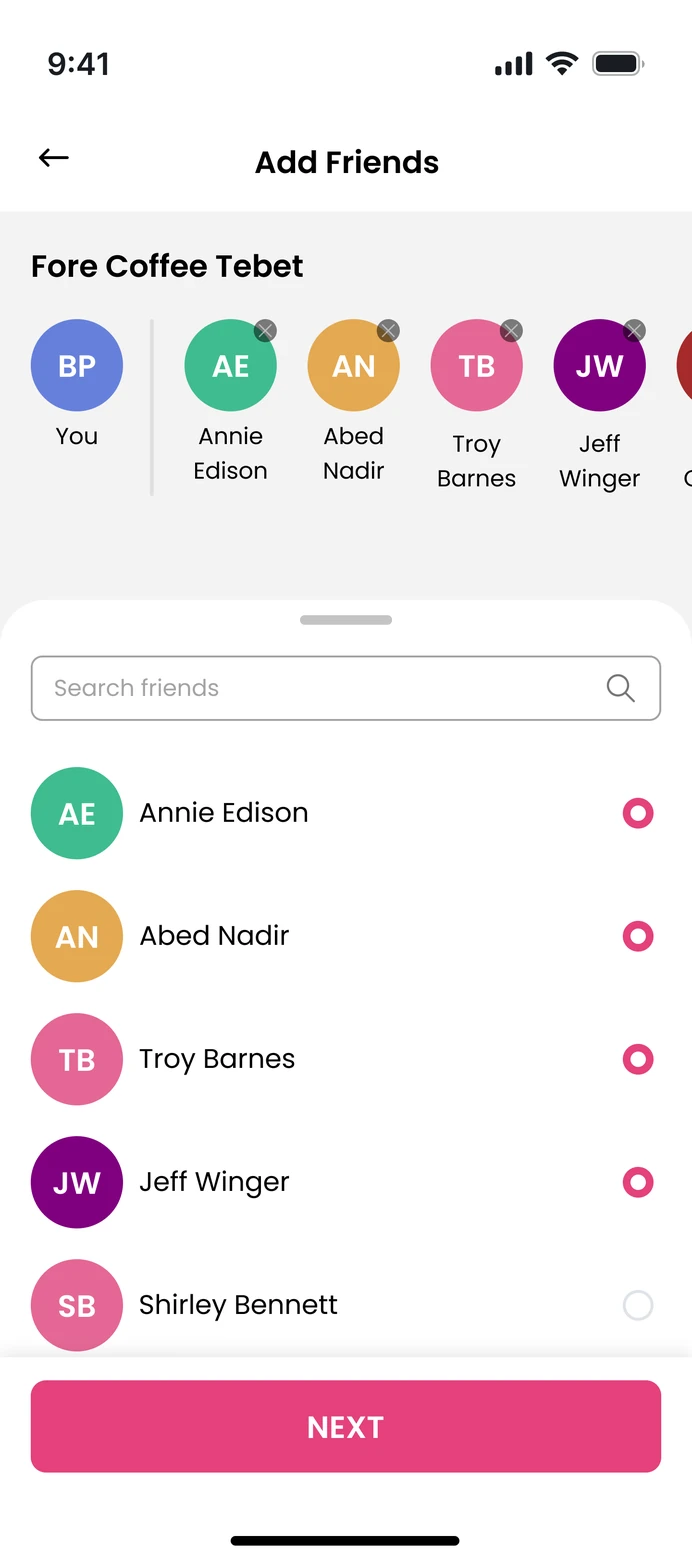
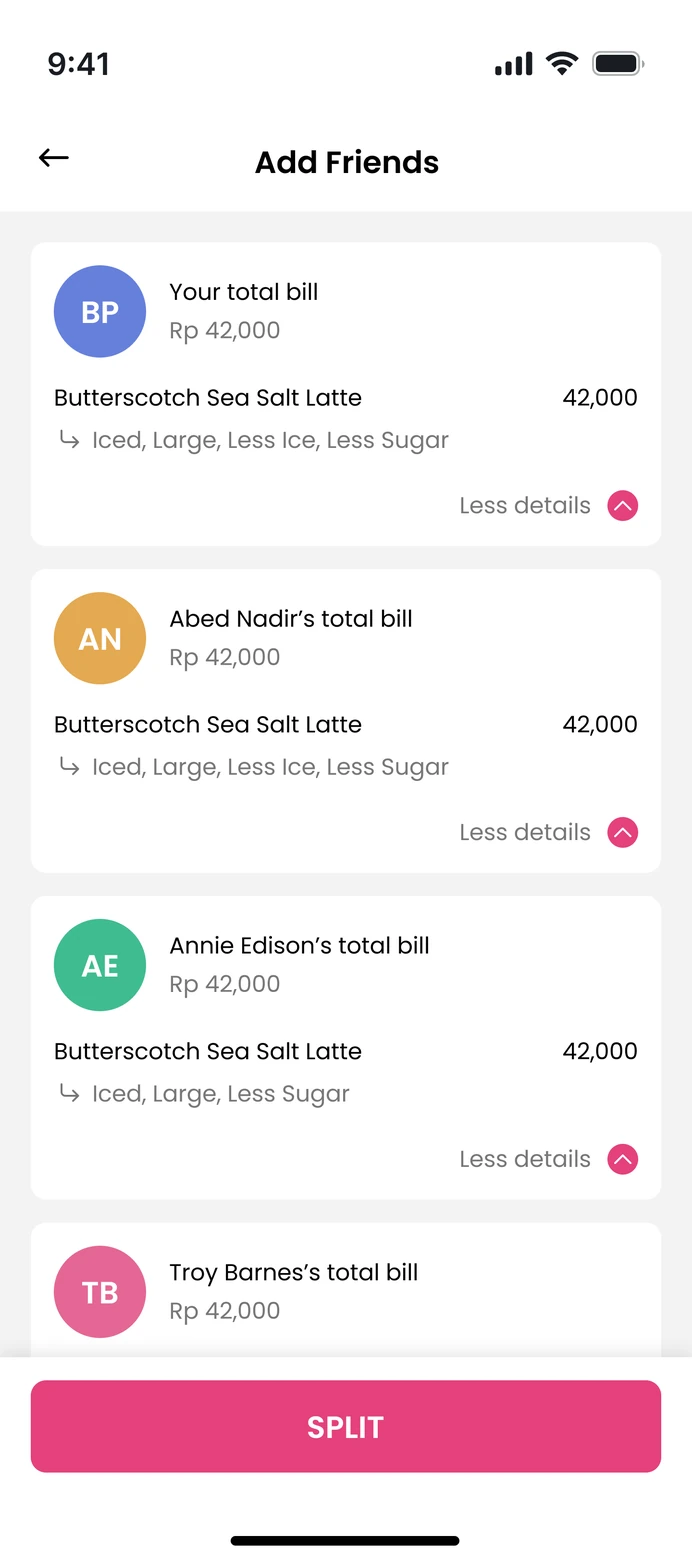
Users photograph the receipt and SmartPay reads the items. They tap who had what, then send the requests and track who has paid, with no calculator and no chasing in group chats.
Arisan and group savings
Shared money, out of the spreadsheet
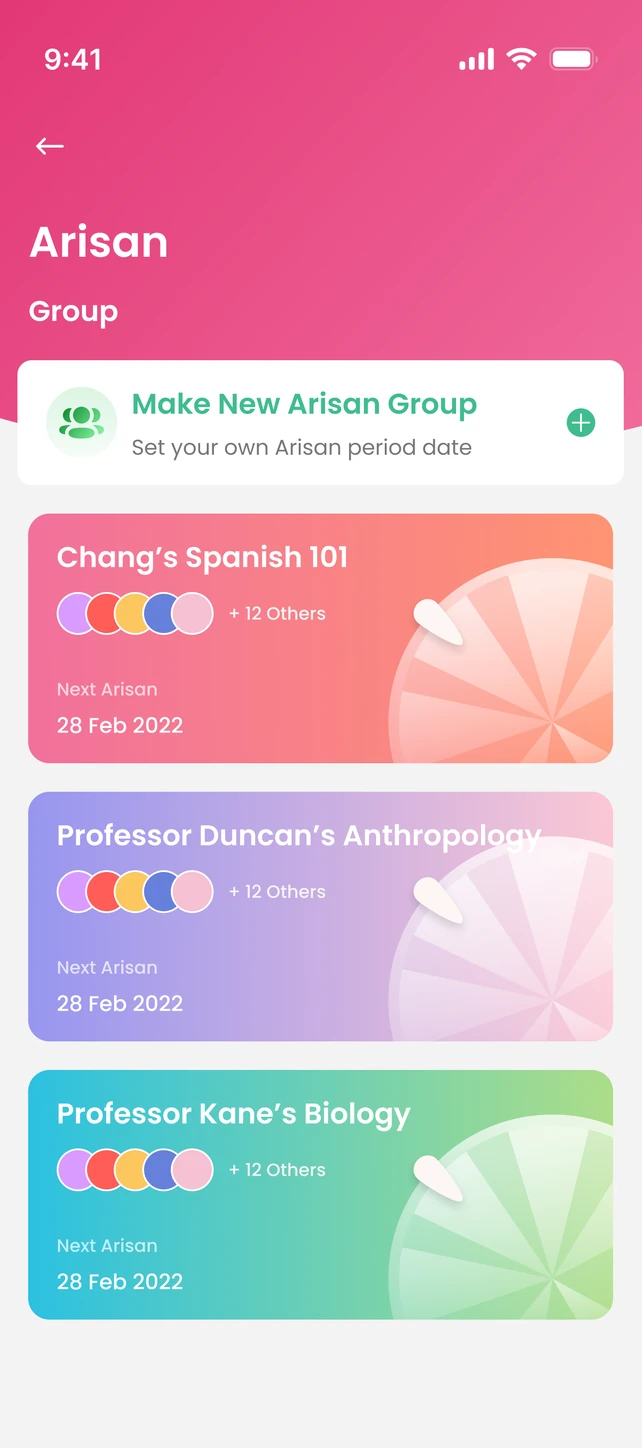
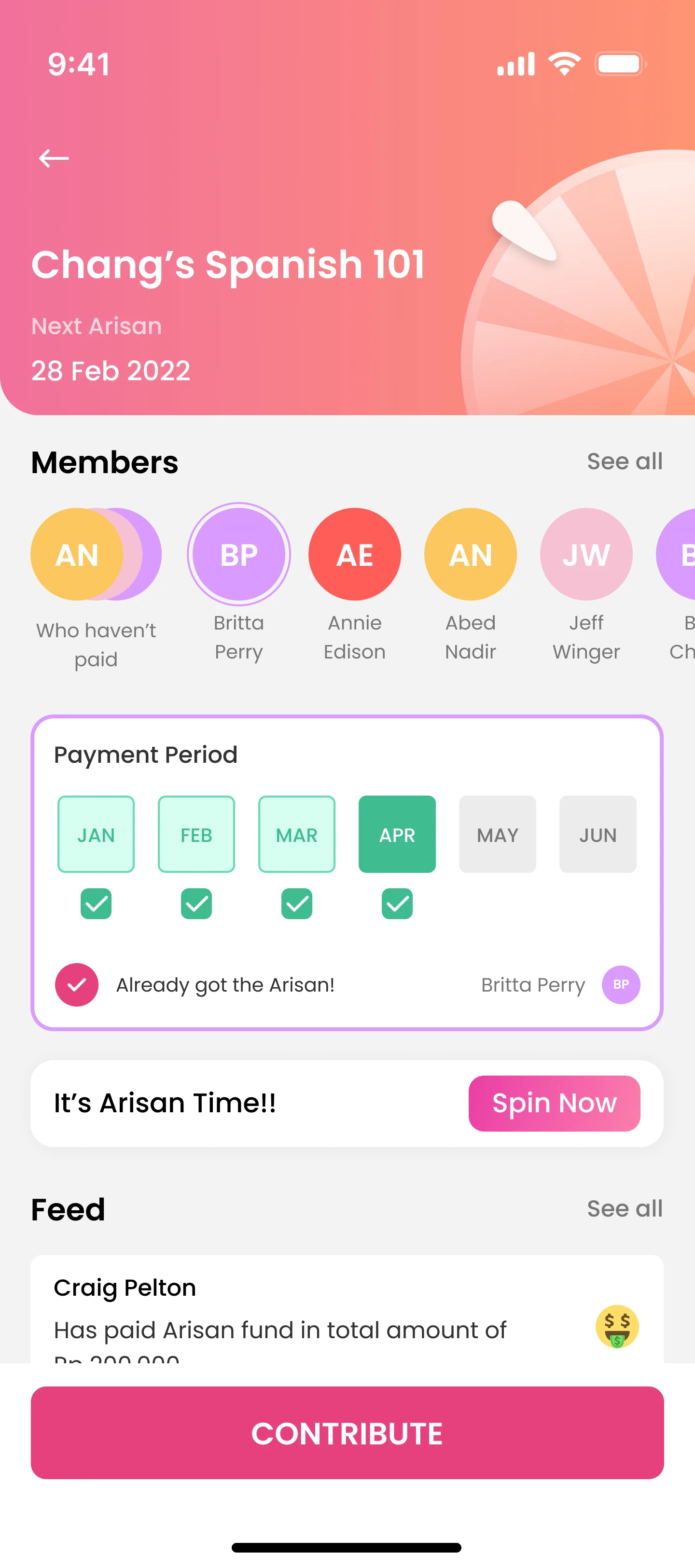
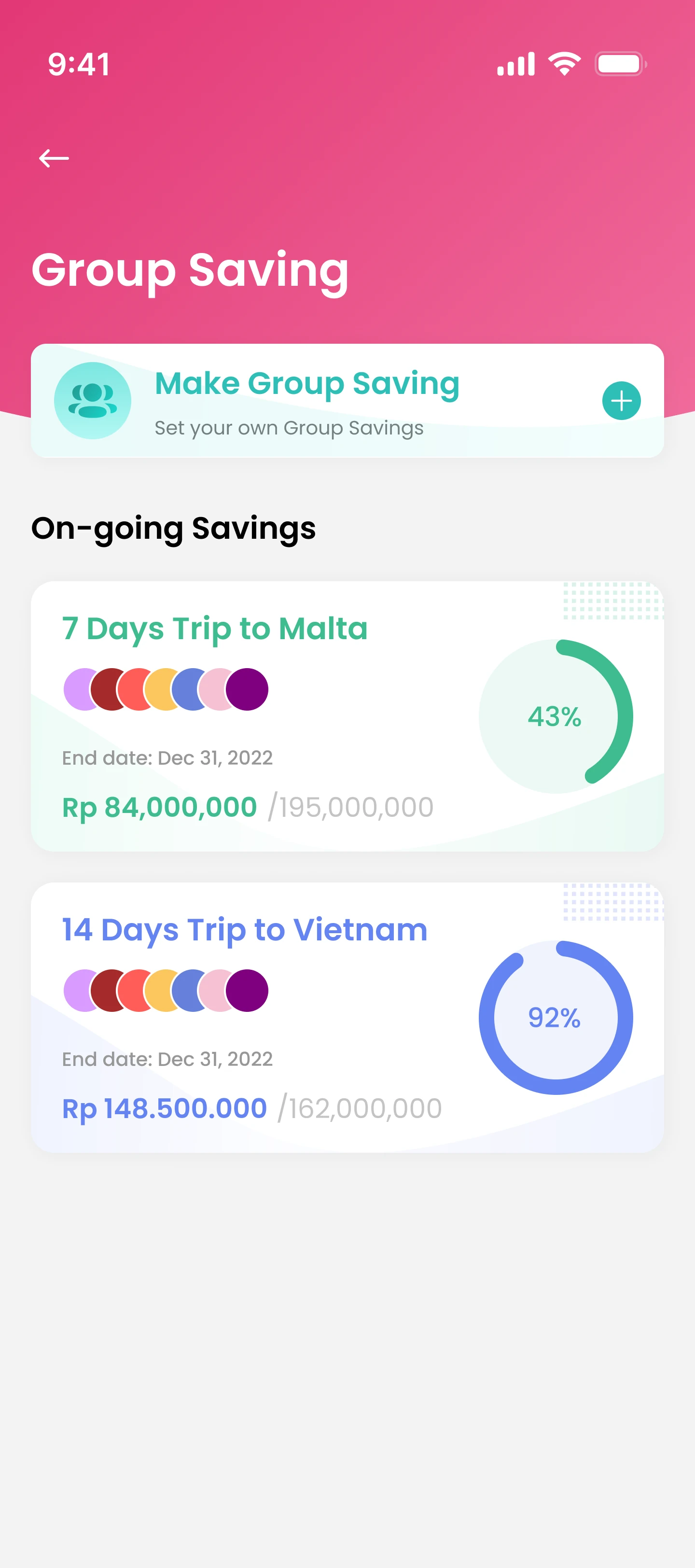
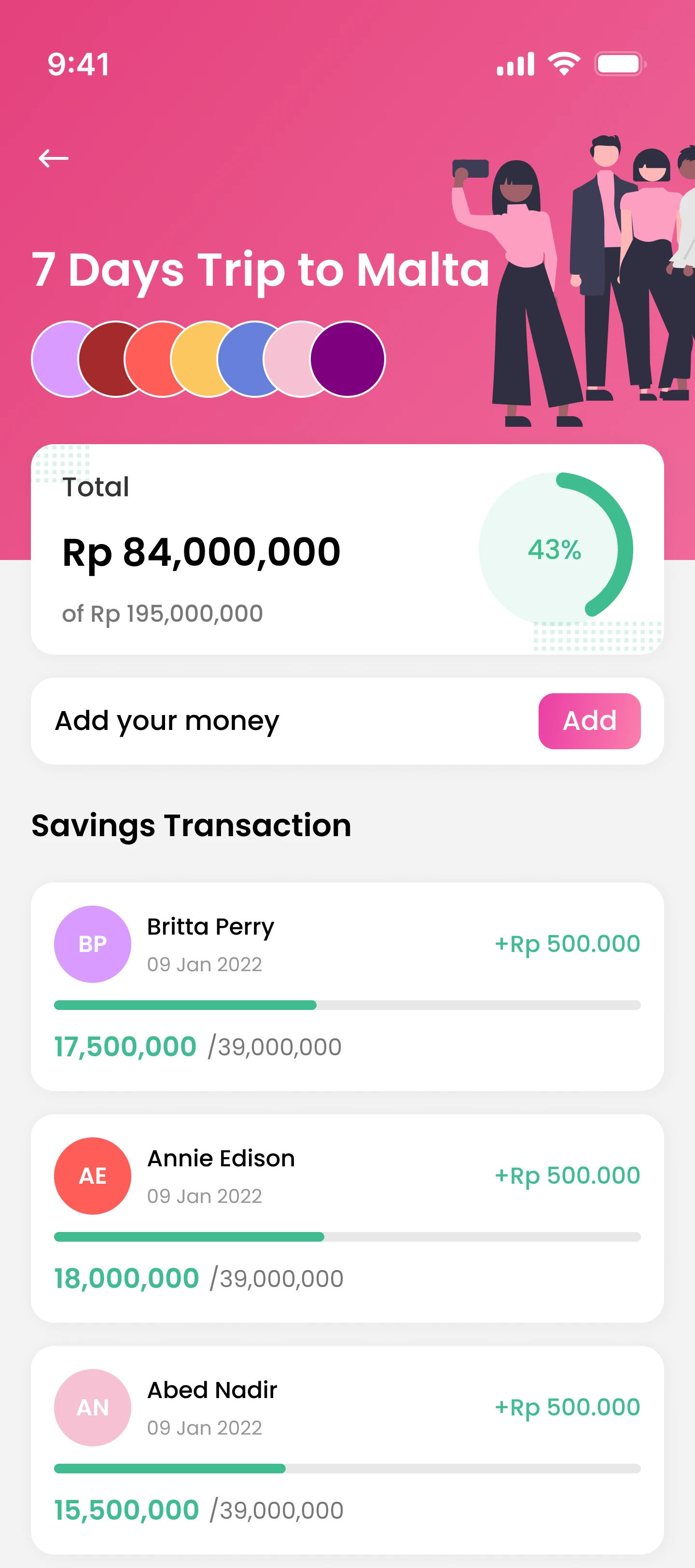
An arisan group shows its members, payment schedule and who hasn’t paid, and a spinner picks the winner on the draw date. Group savings track a shared goal, like a trip, with everyone’s contributions in one place.
Arisan
Group Saving
Also designed
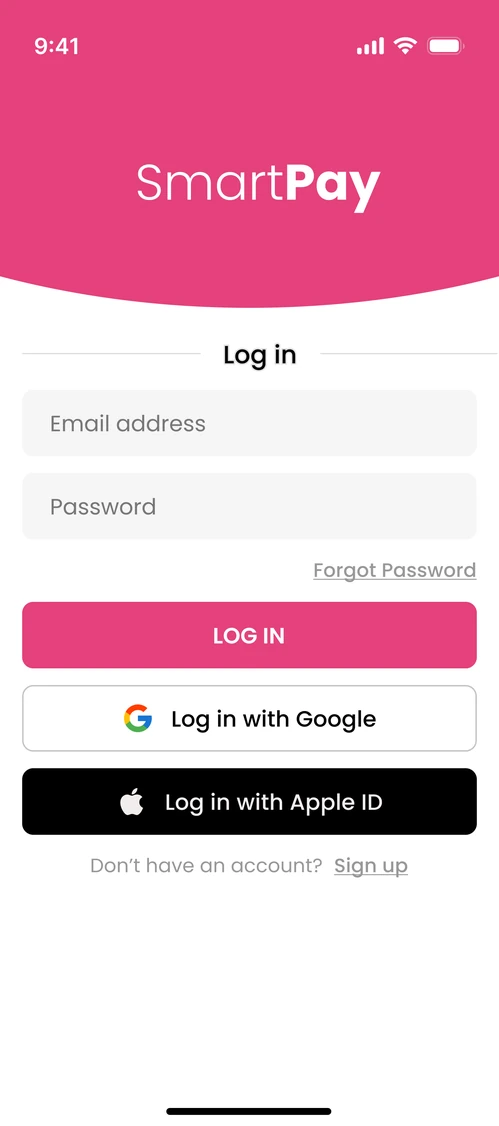
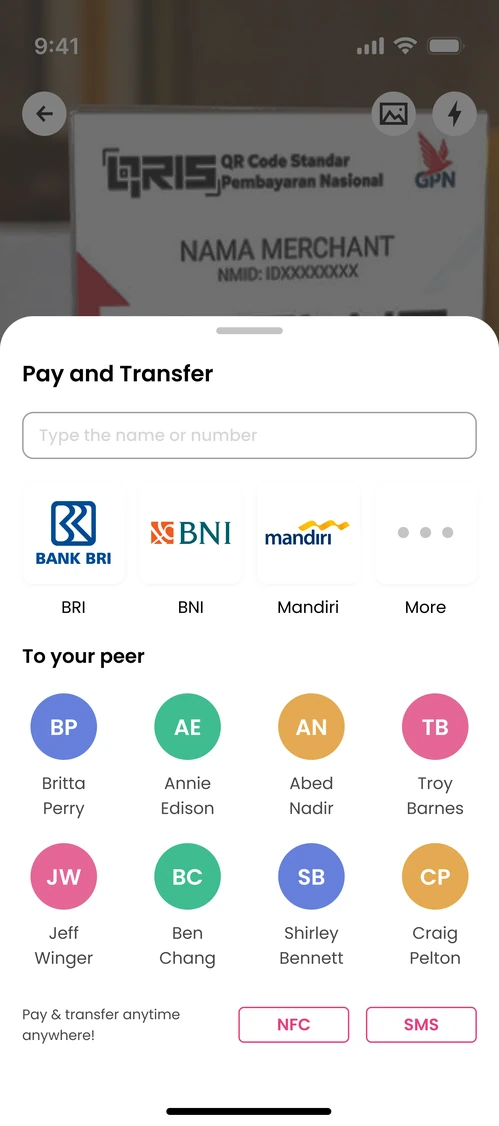
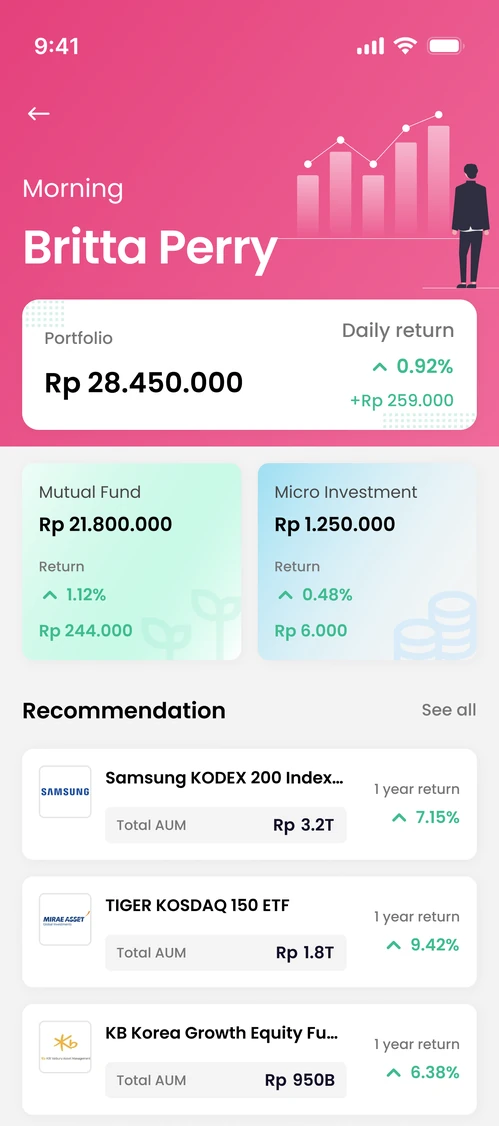
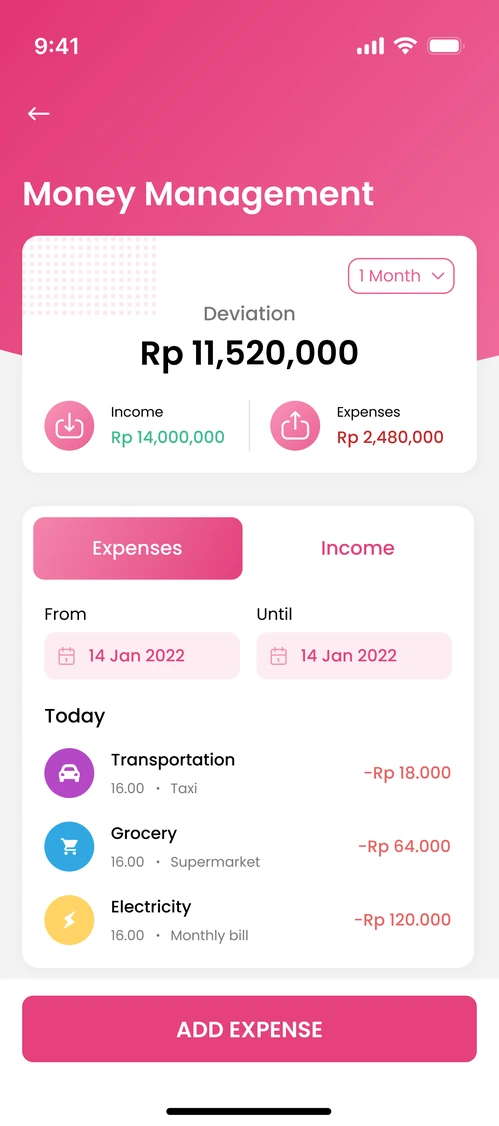
Onboarding and login, the home screen, QR payments and transfers, investments, and money management with spending categories.
Where it landed, and what’s next
We pitched SmartPay internally with the full prototype. The company didn’t take it forward, so it never reached users beyond our tests. It’s still the project where I took a product from a blank page through market research, positioning, information architecture and every screen.
What I learned
Start with the market, not the screens
The competitor analysis showed where design effort would matter: on the few things no one else did well.
Design around habits people already have
Splitting bills and running an arisan already happen in chats and with cash. The product’s job was to make them easier, not invent new behaviour.
Have a role in mind?
Let’s talk.
Open to product design roles, remote or on-site with relocation. Based in Jakarta (GMT+7).